


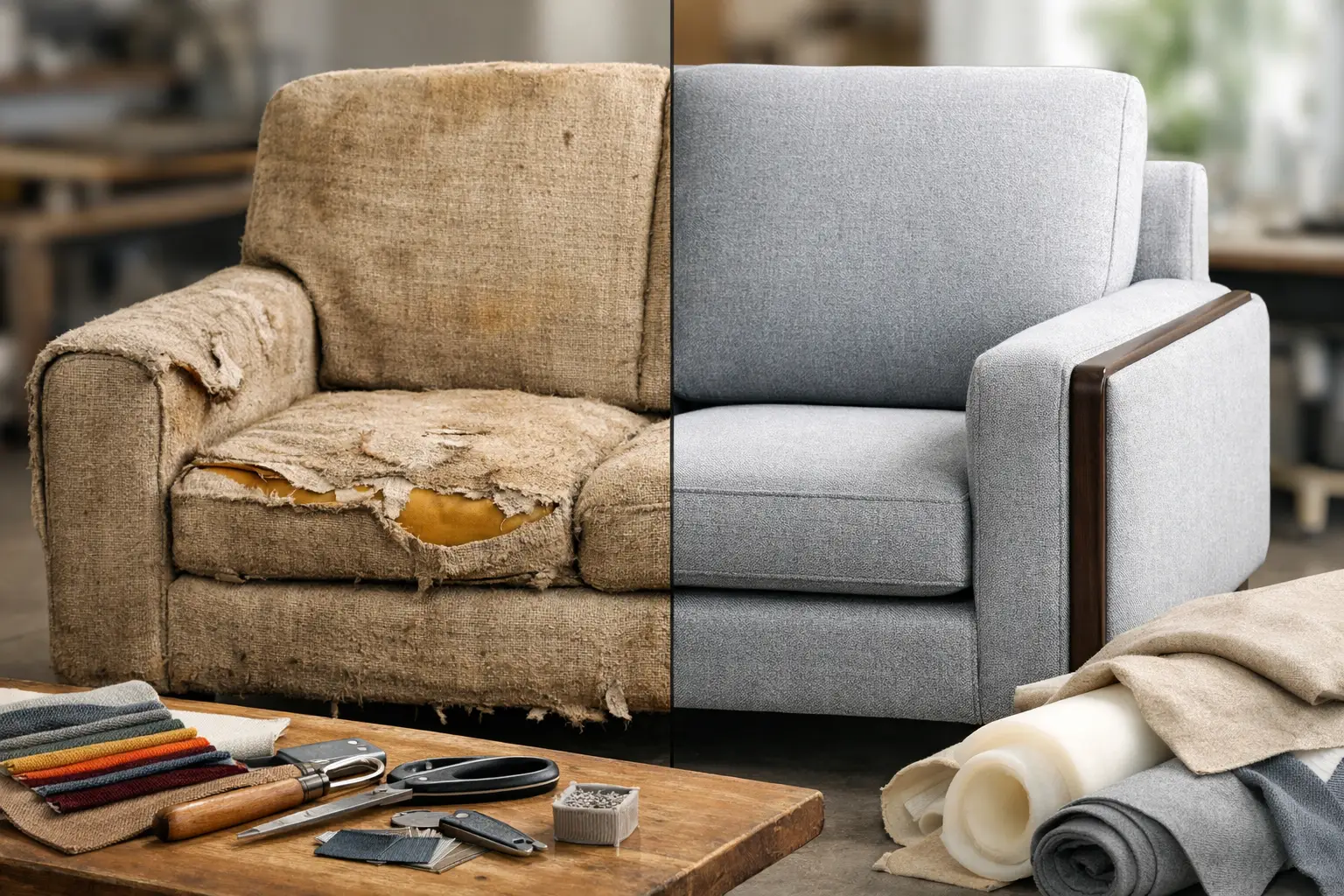
Restoration Versus Replacement Upholstery
A driver brings in a worn leather seat with cracked bolsters, faded colour and collapsed padding, then asks the question that matters most before any work begins: restoration versus replacement upholstery. The right answer is rarely based on looks alone. It depends on material condition, vehicle age, intended ownership, budget, and whether the aim is to preserve originality or return the interior to a factory-fresh standard.
For many vehicle owners in Singapore, especially those with premium cars, convertibles or older models worth preserving, this decision has a direct effect on comfort, resale value and long-term satisfaction. A rushed replacement can strip away character and fit poorly. A cosmetic repair on material that has already failed beneath the surface can be false economy. Good advice starts with honest inspection, not assumptions.
Restoration versus replacement upholstery – what is the real difference?
In workshop terms, restoration means retaining as much of the original interior as possible while correcting wear, damage and age-related deterioration. That may include repairing torn panels, rebuilding foam, re-dyeing leather, restitching seams, replacing selected inserts or renewing backing materials where needed. The purpose is to preserve the original look and feel while extending usable life.
Replacement means removing and reupholstering part or all of the affected trim with new material. This could involve a single seat panel, a full seat retrim, a complete cabin refresh or replacement of associated soft trim if the wear is widespread. Replacement is not automatically the better option. It is simply the more appropriate route when the original material can no longer deliver a reliable result.
The distinction matters because upholstery is not just a visible surface. Underneath the leather, vinyl or fabric, there may be weakened foam, broken support structure, stretched listing points or failing adhesive. A proper assessment looks beyond the top layer.
When restoration is the smarter choice
Restoration tends to make sense when the damage is localised and the base material remains fundamentally sound. A bolster with surface cracking, a seat base with compressed foam, or a section of trim that has faded unevenly may still be good candidates for repair and refinishing. In these cases, a restoration-led approach protects originality and can often achieve a more natural result than replacing large sections unnecessarily.
This is particularly relevant for vehicles with interiors that are difficult to match. Older leather grains, discontinued fabrics and model-specific stitch patterns are not always easy to source. If the original trim still has structural life left in it, preserving it can avoid the mismatch that sometimes comes with partial reupholstery.
Restoration also suits owners who value authenticity. On a cherished car, original details matter. The way the seat sits, the pattern of the stitching, the edge finish and the texture of the material all contribute to the interior’s character. When those details are still salvageable, retaining them is often the better technical and aesthetic decision.
There is also a sustainability case. Repairing rather than replacing reduces waste and avoids discarding material that can still perform well after proper treatment. That only works, however, if the work is carried out with discipline. Surface-level touch-ups without addressing root causes rarely last.
When replacement upholstery is the better investment
There are cases where restoration is no longer responsible advice. If the material has become brittle, if multiple panels are torn, if previous repairs have failed, or if the foam and support beneath have significantly deteriorated, replacement may be the only route to a result that looks right and holds up in daily use.
Heat, humidity and age are hard on automotive interiors in Singapore. Leather can dry and crack. Fabric backing can weaken. Adhesives can fail. Seat foam can lose shape and support. Once deterioration is widespread, trying to save every section usually ends up costing more over time because the repaired areas continue to fail around the parts that were left untouched.
Replacement is often the stronger option when consistency matters. If one front seat is heavily worn and the rest of the cabin is following behind, a selective repair may leave visible differences in colour, grain or firmness. A full retrim gives a cleaner, more uniform finish and can restore comfort properly rather than masking decline.
It is also worth considering the owner’s plans for the car. If the vehicle is being kept for several more years, investing in replacement can make practical sense. If the goal is to prepare a premium or enthusiast vehicle for sale, fresh, properly fitted upholstery can improve first impressions significantly, provided the material choice remains appropriate to the vehicle.
Cost is important, but value is more important
Customers often begin with price, which is understandable. Yet the more useful question is not simply which option costs less today, but which option provides the right outcome for the next few years.
Restoration usually carries a lower starting cost when the issue is limited and the original trim is still viable. It avoids replacing serviceable material and can target the problem area directly. That said, a proper restoration is skilled work. Colour matching, repair blending, foam correction and stitch repair all take time. Cheap cosmetic work may look acceptable for a short while, then wear through quickly.
Replacement has a higher upfront cost because material, pattern work, dismantling and refitting are more extensive. But if the seat or trim has already reached the end of its useful life, replacement may be better value than repeated repairs. Paying twice is rarely a saving.
This is where specialist advice matters. Honest workshop guidance should not steer every customer towards the biggest job. It should identify the most appropriate scope based on condition, not margin.
The hidden factor: fit and finish
One of the biggest differences between average upholstery work and specialist upholstery work is fit. Anyone can cover a seat. Not everyone can return the correct shape, tension and finish.
Poorly executed replacement work often shows up in soft corners, loose centres, uneven stitching, incorrect panel proportions or material that wrinkles too early. On modern vehicles, even small inaccuracies are obvious. On older and premium cars, they can reduce the authenticity of the interior immediately.
Restoration has its own technical demands. Repairing leather without over-hardening the surface, rebuilding foam without changing seat posture, or preserving original seams without creating weak points all require method and experience. Whether the decision is restoration or replacement, execution is what determines whether the car feels properly renewed or merely patched.
How a specialist workshop should assess the job
A disciplined workshop starts by inspecting the actual causes of deterioration. Is the tear caused by surface wear, weakened stitching, collapsed foam or a damaged frame edge underneath? Has the colour faded from UV exposure alone, or has the top coat broken down beyond recovery? Is the issue isolated to one panel, or is the entire seat set ageing at the same rate?
Material matching is the next consideration. A specialist should assess grain, thickness, backing and finish rather than selecting something that is merely close enough. The same applies to stitch style, piping, perforation and seat contour. These details separate quality restoration from generic trimming.
The final part is recommendation. A trustworthy workshop explains what can be saved, what should be replaced, and why. That clarity gives the owner peace of mind from the beginning. At 8 Cushion, that workshop-first approach matters because quality control is strongest when inspection, production and finishing stay in-house.
Choosing the right route for your vehicle
If your interior has isolated wear, retains good structure and still holds its original character, restoration is often the right place to start. If the trim has become structurally unsound, heavily mismatched or extensively degraded, replacement is usually the better long-term answer. Neither option is universally right. The correct decision depends on the condition of the material, the standard you expect and how long you intend to keep the car.
A good interior should not only look better when the work is complete. It should feel right every time you get behind the wheel. When the decision is made carefully, with proper inspection and no guesswork, the result is not just a tidier cabin. It is a vehicle that continues to deserve the care you put into it.
Related posts
How Long Does Windscreen Replacement Take?
How long does windscreen replacement take? Most jobs take 1-2 hours, but curing
Convertible Top Replacement Buyer Guide
Our convertible top replacement buyer guide explains materials, fit, glass, labo

Car Interior Rejuvenation, Uplift Your Self-confidence
Dinner is set at 7pm, Hotel Fullerton. You put on a tie to look smart, styled up