


How to Protect Classic Car Interior Properly
That first crack in a dashboard or split along a seat seam rarely appears overnight. In Singapore, heat, humidity and UV exposure work quietly, then all at once. If you are asking how to protect classic car interior surfaces properly, the real answer is not one miracle product. It is disciplined care, correct material handling and knowing when preservation should give way to specialist repair.
A classic car interior ages differently from a modern one. Older leather can dry from the top while holding moisture underneath. Vinyl may harden and shrink. Adhesives in roof linings and trim panels can weaken under heat cycling. Timber veneers, carpets, foam padding and convertible top linings all respond differently to climate and storage conditions. Protecting the cabin means treating it as a collection of materials, not one single job.
How to protect classic car interior in Singapore conditions
Singapore is not especially forgiving to older cabins. Parked heat builds quickly, UV fades surfaces unevenly and humidity can encourage mould, stale odours and hidden deterioration in foam, underlay and roof lining boards. Even a car that is seldom driven can suffer if it sits closed up for long periods.
That is why light use with proper care is often better than neglect. A classic that is aired, cleaned correctly and monitored for early signs of failure tends to age more gracefully than one left covered and forgotten. Preservation is about control – controlling sunlight, moisture, dirt transfer and unnecessary stress on original trim.
Start with the materials, not the label on the bottle
Owners often make a simple mistake. They buy a generic interior dressing and apply it to everything. That can leave leather greasy, make vinyl unnaturally glossy, stain stitching or interfere with later repair work. On classic interiors, the wrong product can do more damage than no product at all.
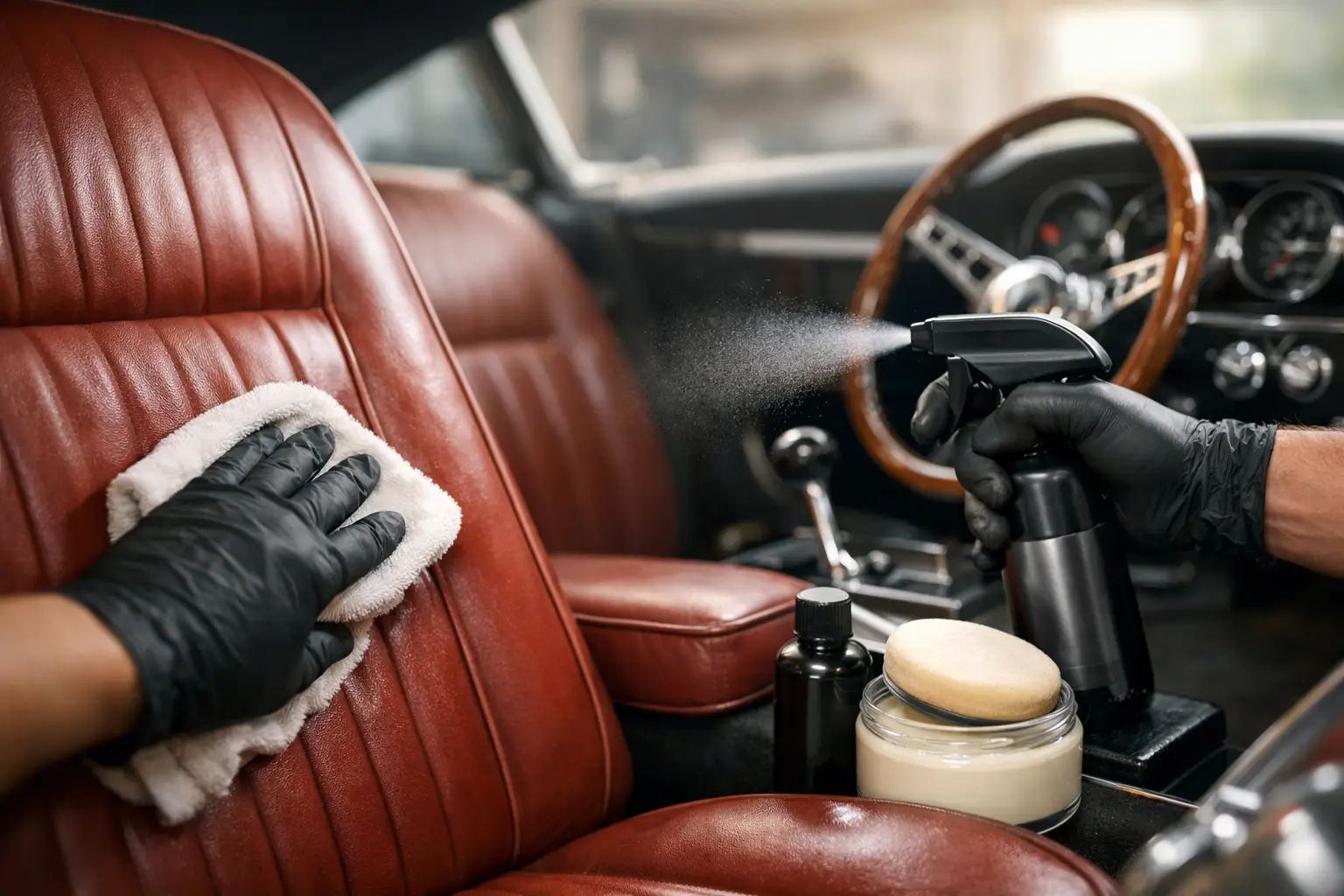
Leather needs a cleaner and conditioner suited to older hides, especially if the surface has begun to dry or stiffen. Vinyl needs protection from UV and heat, but not heavy oil-based treatments that attract dust or leave residue. Fabric inserts and roof linings need gentle cleaning with minimal moisture. Timber and painted trim need a separate approach again.
If you are unsure what a surface actually is, stop before applying anything. Many classic interiors have been retrimmed over the years, and what looks original may be a later material with different care requirements.
Leather needs restraint, not saturation
Leather seats in older cars often suffer from over-conditioning. If too much product is applied too often, the surface can become sticky and attract grime into seams and perforations. Clean first, then condition lightly and only as needed. The goal is suppleness and surface stability, not shine.
Pay close attention to bolsters, piping and stitched edges. These are high-stress areas where drying and abrasion show first. If you see cracking, colour loss or hardening, maintenance products may slow further wear, but they will not reverse structural damage.
Vinyl, plastics and dashboards need UV control
Dashboards, parcel shelves and door tops take the brunt of the sun. Once vinyl begins to shrink or a dash starts to split, the repair is rarely minor. Use a non-greasy protectant designed for UV resistance, and keep the finish natural rather than glossy.
A windscreen sunshade helps, but fit matters. If it leaves exposed edges, those exposed sections still age faster. Window tint can also reduce UV load, but owners should balance cabin protection with regulations and the character of the vehicle.
Dirt is abrasive, and moisture is deceptive
A classic interior does not only wear from dramatic events. Small contaminants do steady damage. Dust acts like a fine abrasive on leather and vinyl. Grit trapped in carpets transfers to mats and lower trim. Moisture from clothing, umbrellas or damp footwear seeps into padding and underlay, where deterioration can continue unseen.
Vacuuming matters more than many owners realise. Use soft brush attachments and avoid dragging hard plastic tools across trim. Clean seams, seat base junctions, carpet edges and under-seat areas where debris builds up. When wiping surfaces, use clean microfibre cloths and change them frequently. Reusing a dirty cloth simply moves abrasive particles around the cabin.
If any area becomes wet, dry it thoroughly. Do not assume air-conditioning alone will solve it. Trapped moisture can lead to mould, corrosion in hidden fixings and breakdown of adhesives behind trim panels.
Storage habits do more than expensive products
If you want to know how to protect classic car interior condition over the long term, storage habits carry more weight than most dressings and cleaners. Shade matters. Ventilation matters. Frequency of inspection matters.
Indoor parking is ideal, but not every owner has that option. If the car must be kept outside, a well-fitted breathable cover can help, though poor covers can trap moisture or chafe paint and trim edges. Avoid leaving the car sealed up for weeks in a damp environment. Periodically air the cabin and inspect it with the same care you would give the engine bay.
Convertible owners need to be particularly careful. Soft-top seals, rear windows, headlinings and upper trim areas are more exposed to heat and moisture changes. A neglected water leak rarely stays confined to one area. It can affect roof lining, seat backs, carpets and electrical components before the source is obvious.
Watch for the early warning signs
Interior damage is cheaper and cleaner to address when caught early. A slight roof lining sag, a faint musty smell, tacky trim surfaces, lifting door card edges or a small split in the driver’s seat are all signals worth acting on.
The trade-off is simple. Early intervention usually preserves more original material. Delayed action often means a broader repair scope, more labour and a harder decision between localised restoration and full replacement.
Cleaning routines should be gentle and consistent
A sensible maintenance rhythm beats occasional aggressive cleaning. For most classic cars, light dust removal every one to two weeks and a more careful interior clean every one to three months is reasonable, depending on use and storage.
Keep glass clean from the inside as well. Film build-up on windscreens and windows can hold contaminants and reduce visibility, especially in humid conditions. Use glass cleaners carefully around aged rubber, stitched trim and fabric edges so liquid does not run into vulnerable areas.
Avoid steam cleaners unless a specialist has assessed the material. Heat and moisture can upset old adhesives, distort boards and raise stains from foam below the visible trim.
Preservation and restoration are not the same thing
Some owners try to maintain their way out of a restoration problem. That rarely works for long. If foam has collapsed, if stitching has failed, if a roof lining is sagging or if leather has gone structurally brittle, preservation products will only mask the issue temporarily.
This is where specialist judgement matters. A disciplined workshop can assess whether the right approach is a localised repair, partial retrim or full restoration. There is no universal answer because originality, material availability, cabin condition and owner goals all affect the decision.
For a collector-grade vehicle, preserving original sections where possible may be the priority. For a frequently driven classic, a more comprehensive interior refurbishment may deliver better comfort, appearance and longevity. The correct route depends on the car and how you intend to use it.
When specialist work protects value better than DIY
DIY care has its place, especially for regular cleaning and climate management. But once trim is lifting, glass seals are leaking, roof linings are failing or upholstery damage has spread into the substrate, specialist work often protects value more effectively than repeated home fixes.
That is particularly true when the work is done in-house with proper material control and clear accountability. On older interiors, removal and refitting quality matter just as much as the visible finish. Poor handling can crack brittle trim, distort panels or create rattles and gaps that were not there before.
A specialist workshop such as 8 Cushion approaches these interiors with restoration discipline rather than generic service-centre shortcuts. That difference matters when parts are aged, patterns are vehicle-specific and mistakes are difficult to reverse.
Practical habits that make the biggest difference
Use the car, but do not bake it. Clean lightly, but regularly. Protect leather, vinyl and trim with the right product, not the strongest product. Address leaks immediately. Keep an eye on stitching, roof lining edges, seat bolsters and dashboard surfaces, because these areas usually reveal trouble first.
Most of all, treat small interior faults as preservation issues, not cosmetic annoyances. A classic cabin holds value in its fit, feel and authenticity as much as its appearance. Look after those details early, and the car will continue to feel properly kept rather than merely old.
The best interior protection plan is not complicated. It is careful, consistent and honest about when expert hands are needed.
Related posts

Why In House Restoration Quality Control Matters
In house restoration quality control protects workmanship, pricing and accountab

Car Interior Rejuvenation, Uplift Your Self-confidence
Dinner is set at 7pm, Hotel Fullerton. You put on a tie to look smart, styled up
Best Vehicle Upholstery Repair Near Me
Looking for the best vehicle upholstery repair near me? Learn how to choose a sp