


Can Torn Car Seats Be Repaired?
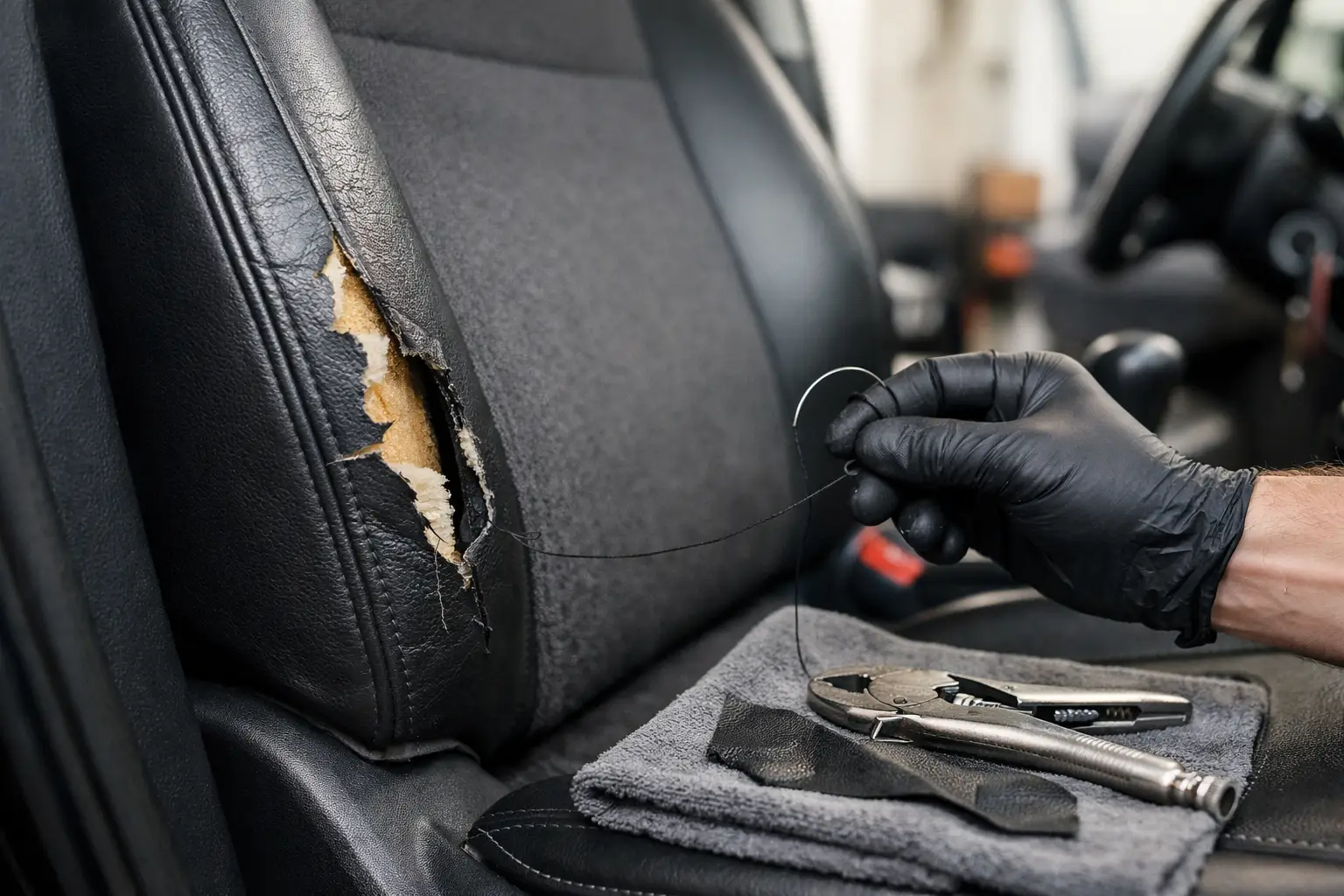
A small split in a seat bolster rarely stays small for long. The moment the surface breaks, daily use, heat, friction and body weight start pulling the damage wider. That is why car owners often ask, can torn car seats be repaired? In many cases, yes – but the right answer depends on where the tear is, what material the seat is trimmed in, and whether the damage is isolated or part of broader wear.
A proper assessment matters because seat damage is not only cosmetic. Torn upholstery affects comfort, weakens support areas and can make an otherwise well-kept cabin look tired before its time. In premium cars, convertibles and older vehicles worth preserving, a poor repair stands out just as much as the tear itself.
Can torn car seats be repaired in every case?
Not every torn seat should be treated the same way. Some can be repaired cleanly and durably. Others need a new panel, partial retrim or full replacement of the seat cover section to restore both appearance and strength.
The most straightforward cases are small, localised tears where the surrounding material is still sound. A split on a single leather panel, a cigarette burn on fabric, or minor seam failure can often be addressed without rebuilding the entire seat. When the original shape, backing and foam remain stable, a skilled trimmer can focus on the damaged area and preserve the rest.
More difficult cases are usually found on driver seats. The outer bolster takes constant abrasion as the driver gets in and out, so visible tearing there may be only one symptom of deeper fatigue. If the surface has gone dry, stretched or thin across a wider section, a spot repair may hold for a short period but leave the surrounding material ready to fail next.
That is where experience matters. A specialist workshop should not push a repair simply because it is the cheapest line item. The correct recommendation is the one that gives the owner a result worth paying for.
What determines whether a seat tear is repairable?
Material type is the first factor. Leather, vinyl and fabric all wear differently, and each calls for a different repair approach. Leather can sometimes be repaired and refinished if the tear is small and the hide around it remains healthy. Vinyl may accept a local repair in light-damage situations, but older vinyl can harden and become brittle, making long-term success less predictable. Fabric repairs depend heavily on weave, pattern and panel position. If the cloth is fraying or the design is difficult to match, replacing the affected insert may be the better route.
The location of the tear matters just as much. A tear on a flat centre panel is usually less stressed than one on an outer edge, side bolster or seam line. High-load zones flex every time someone sits down, so repairs there must cope with repeated pressure. If the damage crosses a stitched seam or sits near an airbag seam, the repair decision becomes more sensitive and should only be handled by a workshop that understands trim construction properly.
Size also changes the answer. A short split of a few centimetres is very different from a long tear with stretched edges. Once the material has distorted, shrunk or curled, it is harder to achieve a neat finish with a simple repair. In those situations, replacing a panel often gives a more disciplined result.
Finally, the age and general condition of the interior cannot be ignored. If one seat has obvious tearing but the cabin also shows fading, collapsed foam and worn stitching, a local repair may solve the immediate problem while leaving the seat visibly uneven. Sometimes the honest advice is to combine upholstery work with foam rebuilding or broader restoration.
Repair or replace – what gives the better result?
This is where many owners get caught between cost and finish. Repair is usually the sensible first option when the damage is contained and the seat cover still has good structural life left. It preserves more of the original trim, keeps costs under control and can return the seat to a tidy, presentable standard.
Replacement becomes the better option when the torn section is too weak, too visible or too heavily loaded to trust with a localised fix. Replacing a single panel can often strike the best balance. It deals with the damaged area properly without forcing a complete retrim where one is not needed.
A full retrim is typically reserved for cases where multiple panels are failing, the original material has aged badly, or the owner wants a uniform restoration result. This is common in older executive cars, collector vehicles and cars that owners intend to keep for years. It is a bigger commitment, but it avoids patchwork outcomes.
There is no universal rule that repair is always smarter or replacement is always superior. The correct path depends on the seat’s condition as a whole, not just the tear you first notice.
Can torn car seats be repaired without looking obvious?
Sometimes yes, sometimes not perfectly. Honest expectations matter.
A high-quality repair should make the damage far less noticeable and restore practical use of the seat. On some materials and colours, the result can be very discreet. On others, especially heavily grained leather, aged trim or patterned fabric, there may still be some evidence that work has been carried out.
That does not mean the repair has failed. It means automotive upholstery is a visible, tactile surface exposed to light, use and ageing. Matching texture, sheen and wear level exactly is more complex than simply closing a tear. A specialist workshop will explain this upfront instead of promising a factory-fresh result in every case.
For owners of prestige or enthusiast vehicles, this transparency is important. A disciplined repair process is not about hiding realities. It is about choosing the method that gives the cleanest, strongest and most appropriate result for the vehicle.
Why cheap seat repairs often disappoint
Seat repairs are easy to underestimate. What looks like a simple tear can involve weakened backing, damaged stitching, foam distortion and material fatigue around the visible split. Cosmetic shortcuts may improve the appearance briefly, but they often fail under normal use.
This is especially true with driver bolsters and frequently used family vehicles. If the repair only treats the surface and ignores stress points beneath it, the tear can reopen or spread nearby. The owner then pays twice – once for the shortcut, and again for proper corrective work.
Another common problem is poor material matching. Colour is only one part of the equation. Grain, thickness, flexibility and panel tension all affect how natural a repair looks and how long it lasts. In specialist upholstery work, process control matters. The difference between a quick patch and a workshop-standard repair is usually visible within weeks.
What to expect from a proper workshop assessment
A worthwhile assessment should look beyond the torn area itself. The trimmer should examine the material type, panel construction, seam placement, seat foam condition and surrounding wear. If the seat has previous repair work, that should also be factored in, because old adhesives, filler or stitching can affect what is possible now.
You should also expect clear advice on trade-offs. If a local repair is possible but may remain slightly visible, that should be explained. If a panel replacement costs more but will look significantly better and last longer, that should be made clear too. Good workmanship starts with accurate scoping, not optimistic guesswork.
For this kind of work, in-house handling has real advantages. When assessment, trimming and fitting are controlled by the same workshop, there is better accountability over finish, fit and turnaround. That matters when the goal is not merely to cover damage, but to restore the seat properly.
When you should act quickly
If the tear is new, small and localised, dealing with it early usually gives you more options. Once the opening widens, dirt enters the damaged area, stitching unravels or the foam starts showing through, repair becomes more involved and replacement becomes more likely.
Heat and humidity also make neglect more expensive. In a climate like Singapore, material fatigue can accelerate once upholstery has been compromised. What could have been a contained seat repair can turn into a larger trim job if left too long.
Owners often wait because the damage seems minor or purely visual. In practice, early intervention protects the seat structure, preserves the cabin’s appearance and helps maintain vehicle value.
A torn seat does not always mean a full retrim, and it does not always suit a quick cosmetic fix either. The best outcome comes from assessing the material, the stress on the damaged area and the standard you want the finished cabin to meet. If the car matters to you, the repair decision should be made with the same care as the workmanship itself.
Related posts
Windscreen Calibration After Replacement Guide
Our windscreen calibration after replacement guide explains when ADAS recalibrat
How to Stop Convertible Roof Leaks Properly
Learn how to stop convertible roof leaks with proper checks, cleaning, drainage
How to Spot Roof Lining Delamination
Learn how to spot roof lining delamination early, from sagging fabric to hidden