


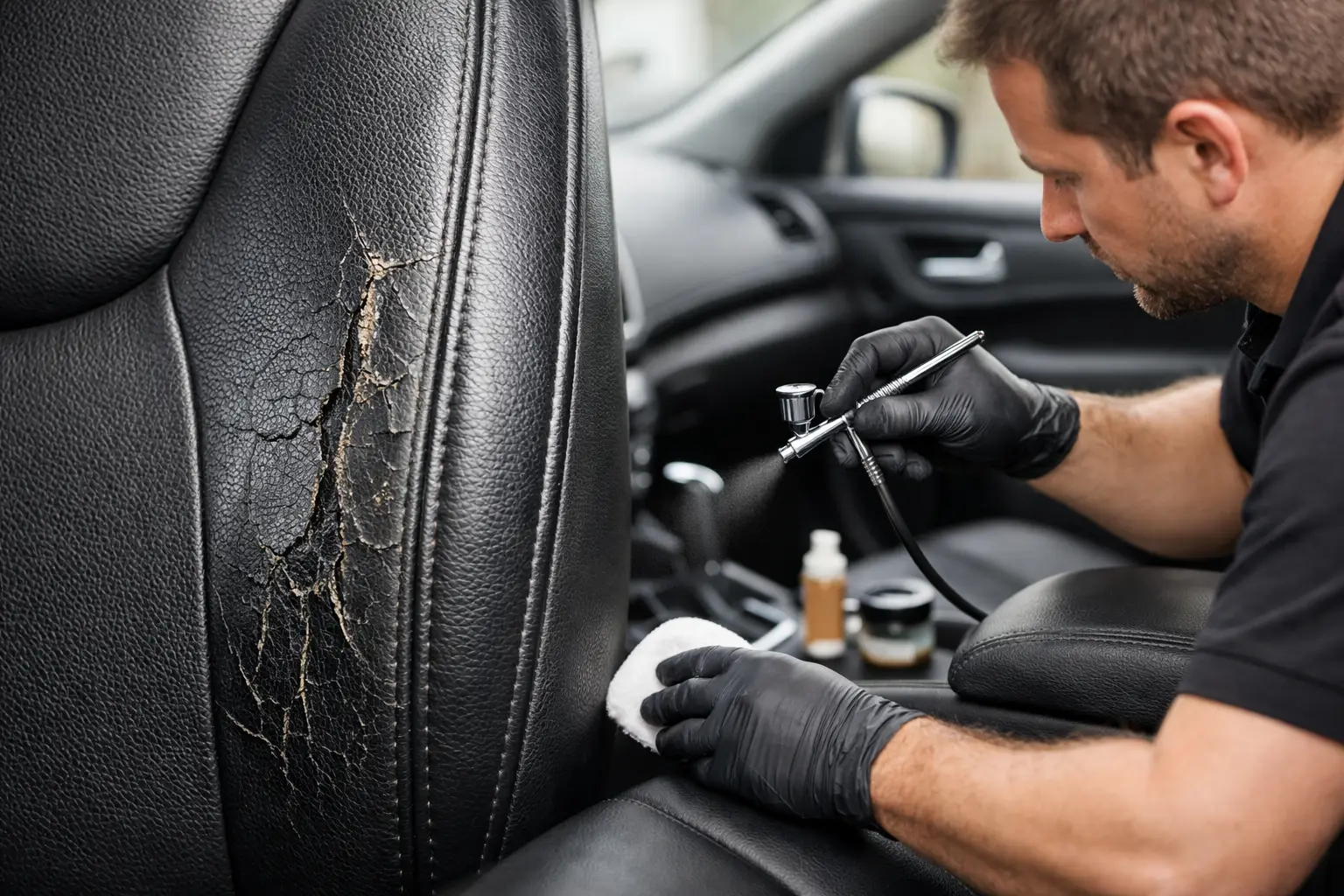
Can Cracked Leather Car Seats Be Repaired?
A leather seat rarely fails all at once. It starts with fine surface lines on the bolster, a dry patch where the driver slides in and out, or a crease that no longer softens after cleaning. At that stage, many owners ask the same question: can cracked leather car seats be repaired? The short answer is yes, often they can, but the right answer depends on how far the damage has gone and whether a repair will genuinely hold.
That distinction matters. A proper leather seat repair is not about making damage disappear for a week. It is about restoring appearance, comfort and durability in a way that suits the age, use and condition of the interior.
Can cracked leather car seats be repaired if the damage looks severe?
In many cases, yes. Cracked leather seats can often be repaired when the damage is limited to the surface finish, the protective coating, or the upper layers of the hide. If the leather is still structurally sound, a specialist can clean, prepare, stabilise, fill, refinish and recolour the affected area so the seat looks significantly better and feels more consistent.
Where owners get disappointed is when all cracking is treated as the same problem. It is not. Light age-related cracking is very different from deep splits, shrinking leather, worn-through panels or foam collapse underneath. A seat may look like it only needs cosmetic work when the real issue is that the leather has become dry, brittle and stretched beyond a dependable repair.
The practical question is not simply whether it can be repaired. It is whether repair is the correct route compared with partial panel replacement or a full retrim.
What determines whether repair is worth doing?
The first factor is crack depth. Fine cracks in the topcoat or finish are usually the most repairable. These are common on side bolsters, seat bases and high-contact areas. They tend to respond well to careful preparation and refinishing, especially when addressed early.
The second factor is flexibility. Leather that still has reasonable strength and suppleness gives a repair far better chances of lasting. Once the material has dried out to the point of becoming hard or papery, cosmetic work alone may not be enough. The surface can be improved, but durability becomes less predictable.
The third factor is whether the leather has split. Cracks and splits are related but not identical. Cracking may be repaired. A split usually needs more structural correction, and sometimes replacement of the affected section is the sounder option.
Underlying support also matters. If the foam beneath the leather has softened, collapsed or distorted, the seat continues to flex in the wrong places. That movement places stress back onto the repaired area. In those cases, disciplined repair should consider both the leather surface and what is happening below it.
When a repair works well
A good repair works best when the damage is localised, the seat has not lost its shape and the owner wants to preserve original trim where possible. This is often the right approach for premium interiors, well-kept daily drivers and vehicles where keeping the factory look matters.
In these cases, the process is not just about adding filler to a crack. Proper work starts with inspection and cleaning, because body oils, conditioners, silicone residue and ingrained dirt can interfere with adhesion. The damaged area is then prepared carefully so unstable edges and weak finish layers are dealt with before refinishing begins.
From there, colour matching becomes critical. Leather repair that is technically sound but poorly matched still looks like a shortcut. A workshop with interior specialisation understands that finish, sheen and texture need to sit naturally with the surrounding panel. That is where craftsmanship shows.
When repair is the wrong answer
Some seats are beyond sensible cosmetic repair. If the leather has torn through, shrunk around the seams, become heavily abraded or failed in multiple high-stress areas, patching the surface may only delay the inevitable. It can improve the look temporarily, but it will not change the fact that the material is at the end of its service life.
This is especially true on heavily used driver seats in older cars, where years of friction, heat and neglect have taken their toll. The outer bolster may be cracked, the seat base may be worn thin and the seam areas may already be strained. In that situation, replacing one or more panels can be a more honest and cost-effective decision than trying to repair every visible defect.
A specialist workshop should be willing to say that. Customers do not benefit from being sold the cheapest-looking answer if it leads to repeat failure.
Can cracked leather car seats be repaired at home?
DIY kits can improve the appearance of light cracking, but they rarely match the standard expected on a valued vehicle. The issue is not that home repairs are impossible. The issue is control.
Leather seats are exposed to heat, humidity, friction and regular loading. Any material used on the surface needs the right flexibility, adhesion and finish. Poor preparation, overfilling, rough sanding or inaccurate colour matching can leave a seat looking patchy, shiny or artificially textured. On black interiors, the mismatch may be obvious under daylight. On beige, grey or tan interiors, it can be even harder to hide.
There is also the risk of treating symptoms rather than causes. If the seat is cracking because the leather is stressed over damaged foam or weakened stitching, a surface repair kit will not solve the underlying problem.
For older runabouts, a home kit may be acceptable as a temporary tidy-up. For premium cars, enthusiast vehicles or interiors you intend to preserve properly, professional assessment is the safer route.
Repair, restore or replace?
This is where experience matters. Repair is usually the least invasive option and can deliver excellent value when the damage is limited. Restoration is broader. It may include leather repairs, recolouring, foam correction, seam work and restoring the seat’s original shape and finish. Replacement comes into the picture when panels are too damaged to trust or when overall condition no longer supports localised work.
There is no universal rule. A newer luxury saloon with one cracked bolster might only need local repair and refinishing. A classic car may justify more careful restoration to preserve its character. A worn family SUV with extensive damage may be better served by replacing affected upholstery sections instead of chasing cosmetic improvement across failing material.
At a specialist workshop, the value lies in independent advice. Not every seat needs a full retrim, and not every cracked seat should be patched.
What owners in Singapore should keep in mind
Singapore’s climate is not kind to neglected interiors. Heat, humidity and UV exposure can accelerate drying, finish wear and surface deterioration, especially on vehicles parked outdoors. Air-conditioned cabins help with comfort, but they do not reverse the effects of years of use.
That is why early intervention pays off. Light cracking is more manageable than deep damage. Once leather has hardened and broken down, repair options become narrower and more costly. Regular cleaning, sensible conditioning and keeping the cabin protected where possible can slow the process, but once cracks appear, the right inspection matters more than another off-the-shelf product.
For owners who care about comfort, presentation and resale value, timing makes a real difference. A disciplined repair carried out while the leather is still salvageable will usually deliver a better and longer-lasting result than waiting until the seat has started to split.
What a proper assessment should include
A credible assessment looks beyond the visible crack. The workshop should consider the type of leather finish, the extent of wear, the condition of adjacent panels, the seam areas, the foam support and whether the colour and sheen can be blended properly.
This is also where transparent scope matters. If only one section needs work, that should be said. If a local repair will stand out because the surrounding seat is heavily worn, that should be said too. Honest guidance saves time and avoids disappointment.
At 8 Cushion, this kind of work is approached as interior restoration, not a quick cosmetic add-on. That means looking at what will hold up in real use, not simply what looks acceptable at handover.
Cracked leather seats are often repairable, but the best outcome comes from choosing the right level of intervention at the right time. If your seat has started to show those first dry lines or heavier fractures on the bolster, do not wait for the leather to open up fully. A careful inspection now usually gives you more options, better finish quality and less compromise later.
Related posts
Custom Upholstery Versus Seat Covers Compared
Custom upholstery versus seat covers: compare fit, comfort, cost and durability
How Long Does Upholstery Repair Take for Cars?
How long does upholstery repair take? Learn what affects car repair times, from
Choosing Replacement Car Seat Foam Properly
Choosing replacement car seat foam is about more than softness. Match density, t