


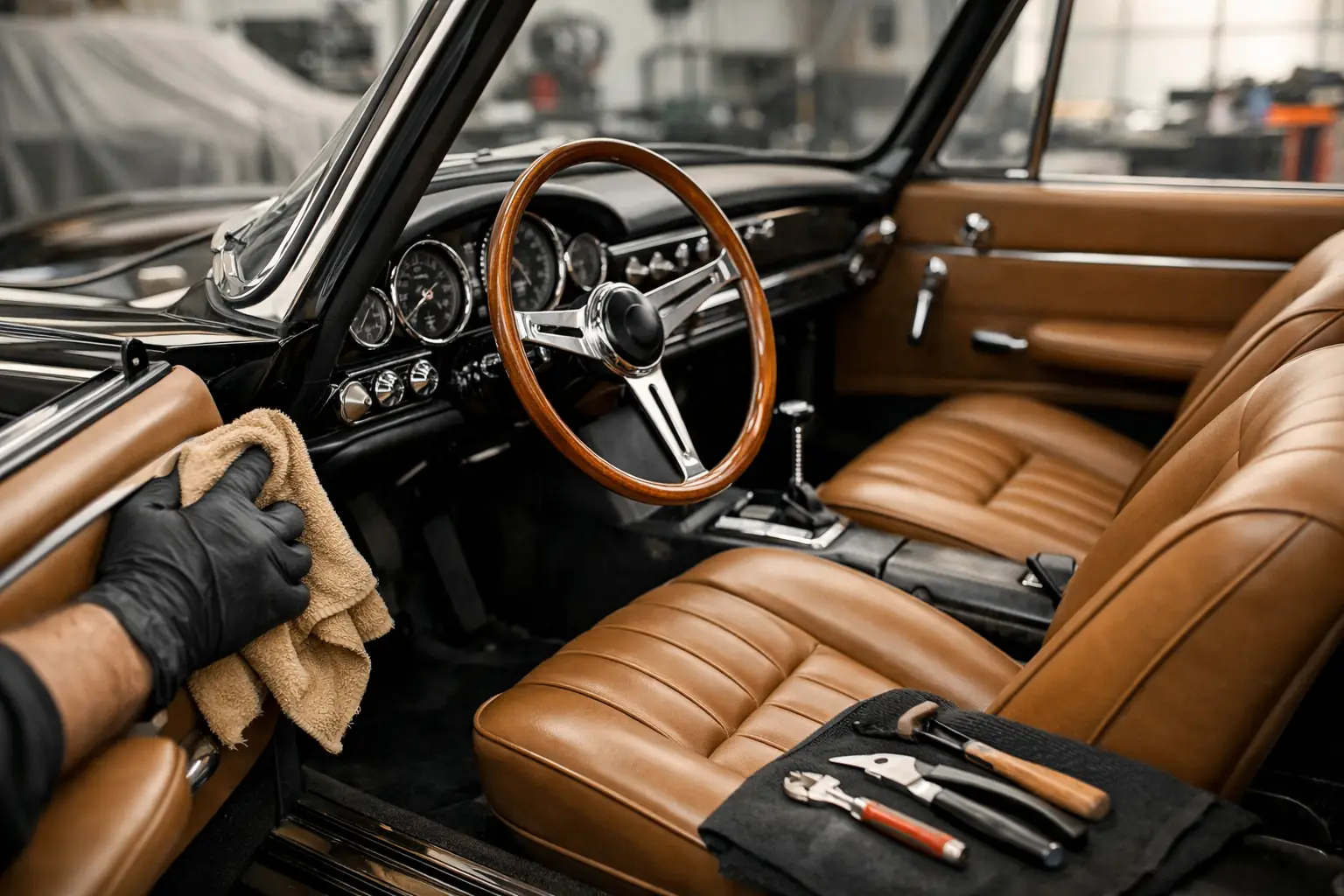
Classic Car Interior Restoration Guide
A cracked dashboard, collapsed seat foam or sagging roof lining can make a well-kept classic feel tired the moment you open the door. This classic car interior restoration guide is written for owners who want the job approached properly – with the right materials, the right process and the discipline to protect originality where it still matters.
Interior restoration is rarely one simple repair. In a classic vehicle, wear tends to come in layers. Vinyl hardens, stitching weakens, backing boards warp, adhesives fail, carpets trap moisture and seals around glass can let in just enough water to create long-term damage. The visible problem is often only part of the work.
That is why a proper restoration starts with assessment, not guesswork. A specialist workshop will not treat a classic cabin like a modern re-trim. The age of the car, its intended use, the availability of matching materials and the owner’s priorities all affect the scope. Some interiors need sympathetic preservation. Others need a full strip-out and rebuild.
How to approach a classic car interior restoration guide properly
The first decision is whether you are restoring for originality, comfort or regular use. Those goals overlap, but they are not identical. A collector-grade vehicle may justify painstaking material matching and retention of original trim patterns. A weekend driver may benefit more from discreet improvements in cushioning, insulation and durability.
This is where honest advice matters. Replacing everything is not always the best outcome. If original door cards can be stabilised and recovered neatly, that may preserve more value than reproducing them from scratch. Equally, trying to save badly degraded foam or moisture-damaged boards can create repeat issues and false economy.
A disciplined workshop should inspect the seats, headlining, carpets, underlay, door panels, dashboard trim, parcel shelf, seals and surrounding glass areas as one system. Interior trim does not fail in isolation. A leaking windscreen seal can ruin carpets. A damaged convertible top can introduce moisture that affects rear panels and stitching. If the cause is ignored, even excellent upholstery work will not last.
What to inspect before any interior trim work starts
Seats are usually the most obvious starting point. Classic seat restoration often involves more than recovering the surface. Foam density changes over time, support wires can fatigue and seat frames may show corrosion. If the seat base is unstable, fresh upholstery alone will not restore comfort or appearance. The best results come from rebuilding the structure first, then fitting the finish material with correct tension and shaping.
Roof linings deserve equal attention. Sagging is common, but the reason varies. Heat, failed adhesive, degraded foam backing and distorted lining boards all produce similar symptoms. In coupes and saloons, the lining must sit smooth and even without stressing the edges. In convertibles, the problem may sit with the soft top, tension cables, weather seals or rear section trim rather than the visible lining alone.
Carpets and underlay can reveal the car’s real condition. Faded pile is cosmetic. Damp backing, mould, brittle sound deadening or rust beneath the floor covering is more serious. When a cabin smells musty, the issue is rarely solved by replacing carpet alone. Water ingress has to be traced properly, especially around windscreens, quarter glass, door seals and convertible roof points.
Door cards and side panels often suffer from warped backing, split retaining points and sun damage. These pieces need careful handling because many classics use fragile clips, aged hardboard or trim designs that are difficult to replicate cleanly. A tidy finish depends on accurate removal and refitting as much as on the upholstery itself.
Materials matter more than many owners expect
One of the biggest trade-offs in any classic car interior restoration guide is material choice. Owners often ask whether leather is always better than vinyl, or whether modern substitutes are acceptable. The answer depends on the car, the budget and the intended finish.
For some classics, the correct automotive vinyl is the right choice because it matches the period look and grain better than leather would. For others, leather is part of the car’s original character and should be repaired or replaced accordingly. Cloth interiors bring their own challenge, especially where patterns are obsolete or fading varies across the cabin.
Adhesives, backing materials and foam quality are just as important as the visible surface. Poor adhesive selection can fail quickly in Singapore heat. Low-grade foam can flatten early and distort the seat shape. In restoration work, the hidden layers decide whether the result stays tight, supportive and clean over time.
That is why in-house control matters. A specialist workshop that handles trimming, fitting and inspection under one roof can maintain better consistency across the project. There is less room for mismatched expectations, and defects are easier to catch before the car is handed back.
Full restoration or partial repair?
Not every classic needs a full interior overhaul. In some cases, targeted repairs are the right route. A small split in a seat bolster, a detached roof lining section or worn carpet edging can often be addressed without stripping the whole cabin. This approach preserves more original material and keeps cost under control.
However, partial repair works best when surrounding trim is still stable. If new material sits beside badly faded or brittle original trim, the contrast can look worse than the damage. The same applies where one repaired section places stress on neighbouring aged parts. A careful workshop should explain when a localised repair is sensible and when it simply postpones a larger job.
For owners balancing budget and presentation, phased restoration can be a practical option. Seats and roof lining may come first, followed by carpets and side panels later. The key is planning the phases so materials, colours and trim style remain consistent.
Cost, timelines and what affects both
Classic interior work is labour-led. The final cost depends less on the size of the car than on the condition, complexity and parts availability. Straightforward re-trimming with available materials is one thing. Rebuilding seat forms, remaking boards, tracing leaks and matching aged finishes is another.
Timelines also vary because dismantling often reveals hidden issues. Rust around fixing points, previous poor repairs, missing clips or distorted substrates can add necessary work. A trustworthy workshop will flag this clearly rather than pushing ahead and presenting surprises later.
Owners should be wary of quotes that seem low without a detailed scope. Interior restoration is not only about fitting new covers. Removal, preparation, structural repairs, material matching, installation and quality checks all take time. Transparent pricing is usually a better sign than a cheap headline figure.
Choosing the right workshop for a classic car interior restoration guide
A classic deserves specialist handling, especially where upholstery, roof linings, convertible tops and glass-related trim issues overlap. Ask how the work is done, who does it and whether the key stages are handled in-house. That level of control affects fit, finish and accountability.
Look for a workshop that speaks plainly about condition and options. You want recommendations based on the car, not a standard package. Good restoration advice should include what can be saved, what should be replaced and where spending more will actually produce a better long-term result.
It also helps to choose a team that understands the wider trim environment. Interior problems are often linked to seals, roof systems and surrounding fittings. A specialist workshop such as 8 Cushion approaches these jobs with that broader view, which reduces the risk of cosmetic work being undermined by unresolved causes.
Getting the best result after restoration
Once the interior is restored, upkeep matters. Park under cover where possible, manage moisture quickly and avoid harsh off-the-shelf cleaners that can dry out leather, stain cloth or weaken adhesives. If the car is stored for long periods, regular ventilation helps prevent trapped humidity and odour build-up.
More importantly, deal with small faults early. A loose trim edge, minor water ingress or a softening roof lining section is easier to correct before it spreads. Classics age best when problems are handled while they are still small and localised.
A well-restored interior changes more than appearance. It improves comfort, protects value and makes the car feel complete again each time you step inside. When the work is assessed honestly, carried out with discipline and matched to the car’s real needs, the result feels right for years rather than just looking fresh for a few months.
Related posts
Car Seat Stitching Repair Service That Lasts
Choose a car seat stitching repair service that protects your upholstery, preser
How to Learn Automotive Upholstery Properly
Learn how to learn automotive upholstery with the right tools, practice plan, ma
Best Auto Upholstery Repair: What Matters
Looking for the best auto upholstery repair? Learn what separates specialist wor