


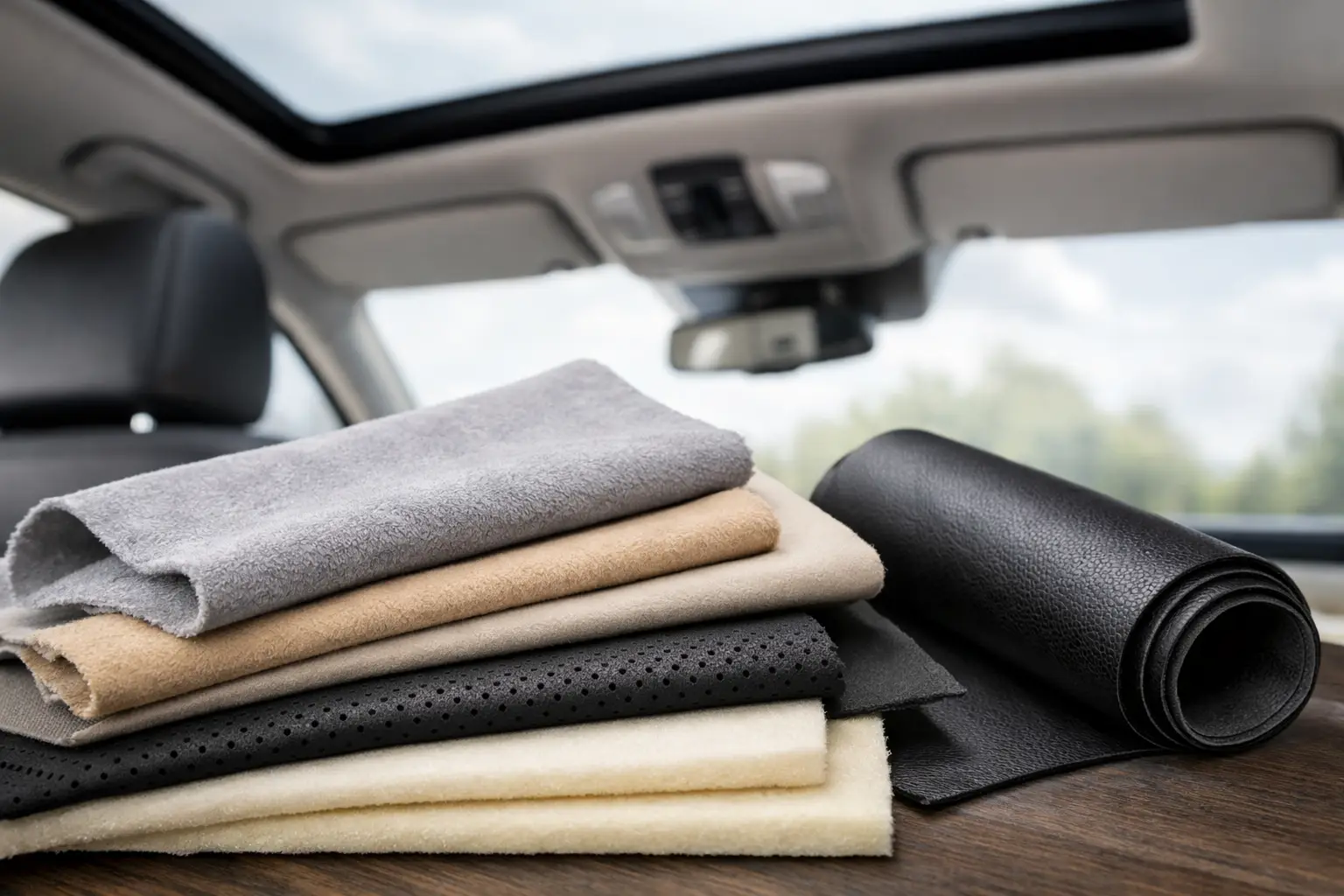
Best Materials for Car Roof Lining
A sagging headliner rarely starts as a dramatic failure. More often, it begins with a slight dip near the rear edge, a patch of loose fabric around the grab handle, or foam dust appearing when the trim is touched. In Singapore’s heat and humidity, those early signs matter. Choosing the best materials for car roof lining is not simply about appearance – it affects durability, cabin comfort, fitment quality and how well the repair holds up over time.
A proper roof lining material has to do more than look tidy on day one. It must tolerate heat build-up under the roof skin, resist moisture-related breakdown, bond correctly to the backing board and suit the character of the vehicle. A family saloon, a prestige model and a restoration project will not always need the same answer.
What makes a roof lining material good?
The best result usually comes from matching the material to the vehicle, not forcing a one-size-fits-all replacement. A roof lining sits in a demanding area of the cabin. It faces constant temperature swings, ultraviolet exposure through glass, vibration, and ageing adhesive. If the wrong fabric or foam is used, even a neat installation can fail sooner than expected.
Material quality matters in three main ways. First, the face fabric affects the look and feel of the interior. Secondly, the foam backing plays a major role in how the material sits against the board and how long it resists sagging. Thirdly, the material must work with the right adhesive system and installation process. Good workmanship cannot fully compensate for poor-grade cloth, and premium cloth will still fail if the backing has already deteriorated.
Best materials for car roof lining by use case
Foam-backed headliner fabric
For most modern vehicles, foam-backed headliner fabric is the standard and usually the safest choice. This material is designed specifically for automotive roof lining work. It combines a surface fabric with a thin foam layer that helps create a smooth finish over the board, softens minor imperfections and gives the cabin its original upholstered look.
When the material is automotive grade, it performs well in heat and offers the closest match to factory finish in many vehicles. This is often the best route for owners who want a clean, correct-looking replacement without changing the interior character.
The trade-off is that not all foam-backed fabrics are equal. Low-grade versions can break down quickly, especially in hot climates. The foam can turn brittle, powder away and release the fabric from the board. That is why the material source and storage conditions matter just as much as the visible finish.
Tricot headliner fabric
Tricot is a knitted automotive lining material commonly used in many cars because it has a refined finish and stretches well around contours. It is particularly useful where the roof board has curves, recesses or complex edges. A good tricot headliner gives a tidy, uniform look and can sit very naturally in modern interiors.
Its strength is appearance and flexibility. However, it still depends heavily on backing quality and correct bonding. If a customer is looking only at texture or colour swatch and not at the full material construction, it is easy to choose something that looks right in the hand but is less convincing once installed.
Suede-style and synthetic microfibre materials
Some owners want a richer cabin feel, especially in premium vehicles or custom interior work. Suede-style materials and synthetic microfibre can deliver that more upscale appearance. They can lift the whole cabin, reduce visual harshness and pair well with black, charcoal or darker interior themes.
This option suits certain vehicles very well, but it is not automatically the best material for every car roof lining job. Heavier materials can be less forgiving on some boards, and some finishes show marks more easily. In a daily-driven vehicle, maintenance expectations should be realistic. A prestige look is attractive, but it should still be practical for the owner.
OEM-style cloth matched to original trim
For restoration-led work or owners who care about preserving factory character, OEM-style cloth is often the right answer. This approach aims to keep the car looking as it should, rather than introducing a custom texture that may feel out of place. For older vehicles, matching grain, shade and finish can make a major difference to the final result.
This is where specialist advice matters. The closest visual match is not always the most durable option, particularly if the original material had known weaknesses. Sometimes the better decision is a carefully selected modern equivalent that preserves the look while improving longevity.
Materials that often cause problems
General-purpose fabric is one of the most common mistakes. Ordinary upholstery cloth, household fabric or non-automotive lining may seem like a saving at first, but they are not designed for overhead automotive use. They may lack the right backing, stretch, heat resistance or weight characteristics.
Leather and thick vinyl are also poor choices for many roof lining boards. They can be too heavy, too stiff, or too difficult to shape around the roof contours and trim openings. In some custom applications they may be used, but only with full understanding of the structure underneath. For typical headliner replacement, they create more risk than benefit.
Another problem area is cheap replacement material sold without clear specification. If there is no confidence in the foam density, heat tolerance or intended automotive use, the owner is taking a gamble. Roof lining failure is often blamed on adhesive alone, but poor material quality is frequently part of the story.
Why foam backing matters more than most owners expect
When a headliner fails, the visible issue is the falling fabric. Underneath, the foam layer is often the true point of failure. Over time, heat and age cause the foam to dry out and crumble. Once that happens, the adhesive has no stable surface to hold.
That is why simply regluing old roof lining material rarely gives a lasting result. If the foam has degraded, the material needs to be replaced properly and the board must be cleaned back to a sound surface. Skipping that preparation may save time in the short term, but it usually leads to repeat failure.
The best materials for car roof lining are therefore not just about the face fabric. They must include stable, automotive-grade foam and be fitted with a disciplined process. In workshop practice, the hidden layer often determines whether the repair lasts.
Heat, humidity and vehicle type
In Singapore, environmental exposure should shape material choice. A car parked outdoors every day faces very different cabin temperatures from one kept under cover. Large glass areas, sunroof configurations and body style also make a difference. Coupes, MPVs and older continental vehicles may all place different demands on the roof lining system.
That is why there is no universal best fabric in isolation. A practical daily driver may benefit most from a reliable OEM-style foam-backed cloth that resists heat and keeps the cabin looking correct. A collector vehicle may justify more effort in period-correct matching. A luxury car owner may prefer a higher-end finish, provided the structure and usage pattern support it.
Choosing the right finish for your interior
Colour and texture should be handled carefully. Going lighter can freshen an interior, but pale materials show age and marks more quickly. Darker tones often look sharper and can modernise a cabin, though they may make a small interior feel more enclosed.
Texture matters as well. A smooth cloth gives a factory-clean result. A suede-style finish feels more premium but changes the visual language of the cabin. Neither is automatically right or wrong. The correct decision depends on whether the aim is restoration, upgrade or resale-friendly refurbishment.
What a proper specialist will assess
A disciplined roof lining job starts with assessment, not guesswork. The board condition, previous repairs, trim removal requirements and material suitability all need to be considered before work begins. Some boards are brittle with age. Others have distortions or previous adhesive contamination that affect the final finish.
This is where an in-house specialist workshop adds value. The material is only one part of the job. Preparation, handling, storage and fitment standards matter just as much. At 8 Cushion, that attention to process is what gives customers peace of mind from the beginning – especially when the vehicle deserves more than a quick cosmetic fix.
If your roof lining is starting to drop, the smartest move is not to ask for the cheapest fabric. It is to ask which material suits your car, your usage and the finish you want to live with for years. The right answer is usually the one that still looks proper long after the fresh glue smell has gone.
Related posts
Best Vehicle Upholstery Repair Near Me
Looking for the best vehicle upholstery repair near me? Learn how to choose a sp
Windscreen Repair Versus Replacement Guide
A practical windscreen repair versus replacement guide for Singapore drivers - w

Best Seat Bolster Repair Methods That Last
Learn the best seat bolster repair methods for leather, vinyl and fabric, and wh