


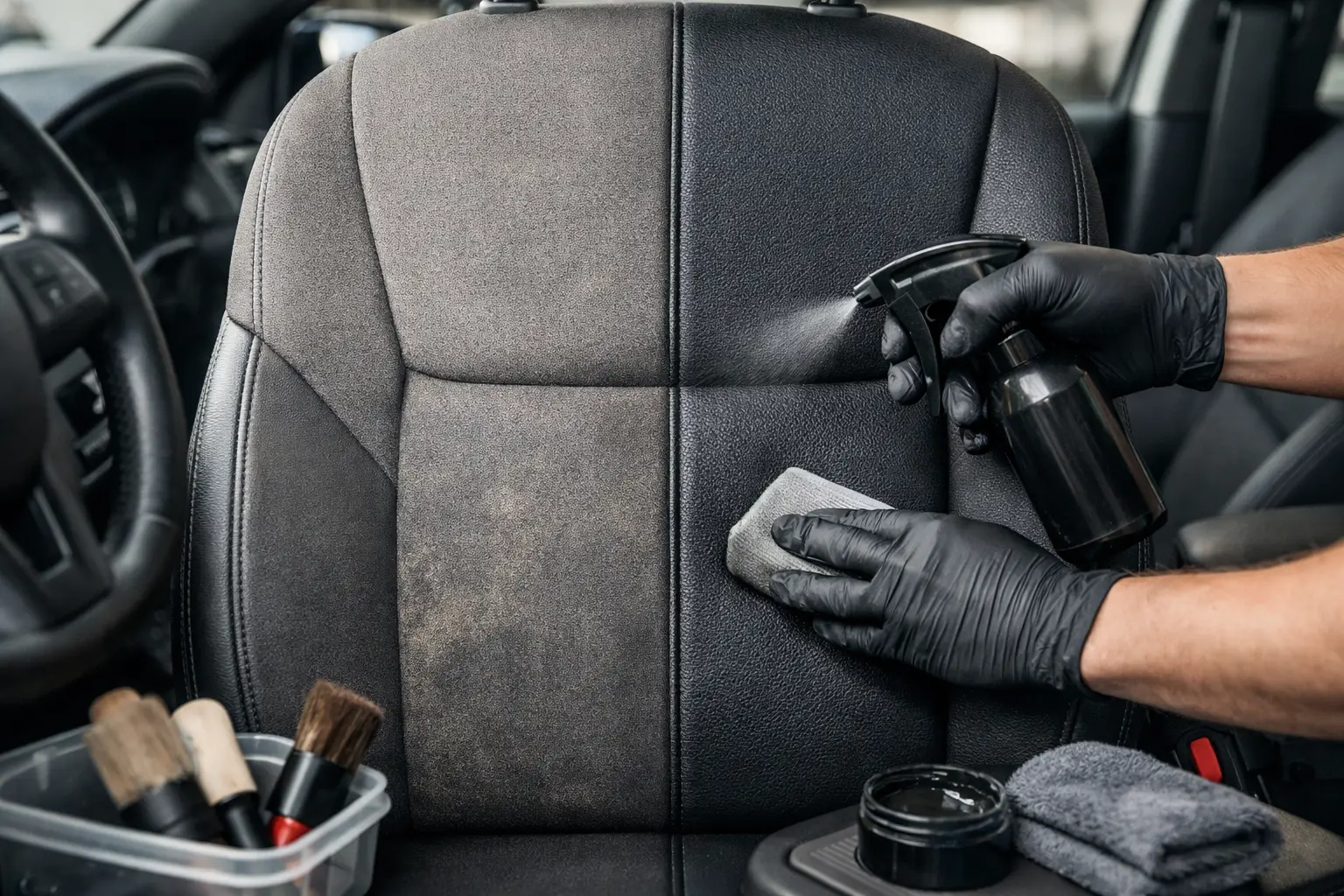
How to Restore Faded Car Upholstery Properly
A car interior rarely fades all at once. It usually starts with one panel catching more sun than the rest, a headrest losing depth of colour, or a seat bolster looking tired beside fabric or leather that still has life in it. If you are looking up how to restore faded car upholstery, the first thing to know is this: fading is not just a cosmetic issue. It often signals UV damage, drying, weakened surface finish, or material fatigue that needs the right treatment, not just a quick cover-up.
In Singapore, heat, humidity and regular sun exposure accelerate interior wear. Cars parked outdoors, convertibles, and older premium vehicles tend to show it sooner. The good news is that faded upholstery can often be improved significantly. The less convenient truth is that the right method depends entirely on what has faded, how far the damage has gone, and what the material is underneath.
What causes upholstery to fade in the first place?
Most owners assume fading is simply age. Age plays a part, but sunlight is usually the main culprit. UV exposure breaks down dyes and topcoats over time, especially on leather seat faces, upper bolsters, rear shelves and door trims. Heat then dries the material further, leaving it looking flat, chalky or uneven.
Contamination matters as well. Body oils, sweat, cleaning residue and trapped dirt slowly change the surface. On leather, this can strip away finish and make worn areas appear lighter. On fabric, it can leave patchy discolouration that looks like fading but is actually a mix of sun damage and embedded grime.
There is also a difference between faded colour and failed material. If the upholstery is cracked, brittle, delaminating, torn or shrinking, colour restoration alone will not solve the problem. That is where experienced assessment saves time and money.
How to restore faded car upholstery based on material
The biggest mistake in DIY restoration is treating all upholstery as if it behaves the same way. It does not. Leather, vinyl, synthetic leather and fabric all age differently, and each needs its own approach.
Leather upholstery
Leather can often be restored if the hide itself is still structurally sound. Proper restoration usually starts with deep cleaning to remove oils and old dressing residue. After that, the surface may need light preparation to remove loose finish and smooth out worn areas. Only then does recolouring make sense.
A professional leather recolouring process is designed to bond with the prepared surface rather than sit on top like paint. When done properly, it can restore depth of colour and a more original finish. When done badly, it transfers onto clothing, wears through quickly, or leaves the seat looking artificial.
If the leather has hardened, cracked deeply or started splitting at stress points, recolouring may only improve the appearance temporarily. In those cases, repair sections or partial retrimming may be the better long-term decision.
Vinyl and synthetic surfaces
Vinyl and synthetic leather can also fade, particularly on door cards, side trims and older seat panels. These surfaces need compatible products and careful prep. Some aftermarket dyes work reasonably well on light cosmetic fading, but adhesion is always the issue. Without the correct process, the finish can peel, especially in hot conditions.
For heavily worn synthetic materials, replacement is sometimes more practical than repeated cosmetic work. A specialist workshop will usually tell you plainly when restoration is worthwhile and when it is not.
Fabric upholstery
Fabric is different again. If the colour loss is minor and the fibres are intact, deep cleaning can improve the appearance more than many owners expect. Dirt sits in the weave and dulls the original shade. Once that is removed, the fabric can look noticeably fresher.
True sun fading in fabric is harder to reverse fully. There are textile colour restoration methods, but results vary by fabric type, age and exposure pattern. If one area has faded badly while the surrounding trim remains darker, a full uniform result can be difficult without reupholstery or panel replacement.
Can you do it yourself?
Sometimes, yes. If the upholstery is only lightly faded and the material is otherwise healthy, careful cleaning and conditioning may restore enough richness to improve the cabin. This is especially true where the problem is surface dullness rather than major pigment loss.
What DIY can do well is maintenance-level recovery. It can clean away residue, lift embedded dirt, and help stop further drying. What it usually cannot do well is replicate factory finish, correct heavy UV bleaching, or repair damage that has already gone beyond the surface.
The risk with home kits is not only poor results. It is making later professional restoration harder. Over-application of glossy conditioners, silicone-heavy products, household cleaners or off-the-shelf dyes can contaminate the substrate. That means more preparation work later, and in some cases a weaker repair outcome.
If you decide to try a DIY route, test a hidden area first. Match the product to the actual material, not what you assume is fitted to the car. Avoid anything that promises instant permanent colour in one pass. Good restoration is usually a process, not a shortcut.
Signs that specialist restoration is the better option
A disciplined workshop approach becomes more important when the interior has uneven fading, visible wear on high-contact areas, or mixed materials across seats and trim. Matching colour across an ageing interior is not guesswork. It requires material knowledge, preparation standards and controlled application.
You should lean towards specialist help if the upholstery has any of the following issues: surface cracking, flaking finish, dye transfer, shrinkage, split seams, patchy previous repairs, or fading concentrated in convertible or high-heat exposure zones. These problems often overlap. Treating only the colour without addressing the underlying wear usually leads to disappointment.
Owners of premium cars, classic vehicles and restoration-worthy interiors should be especially careful. Poor colour work can cheapen the cabin quickly. Correct work, by contrast, protects not just appearance but comfort, authenticity and resale confidence.
What a proper upholstery restoration process looks like
When the work is done properly, restoration starts with assessment rather than product selection. The workshop needs to determine whether the material can be revived, repaired, recoloured, or should be replaced in section. That decision affects durability far more than the final shade itself.
Cleaning and preparation come next. This is the stage many quick fixes skip, yet it is where most of the result is won or lost. Contaminants are removed, unstable finish is dealt with, and the surface is prepared to accept repair or colour work evenly.
If required, minor damage is repaired before recolouring. That may involve filling shallow cracks, stabilising worn areas or correcting surface texture. Only after that should colour restoration begin. The objective is not to make the seat look freshly painted. It is to return a consistent, factory-appropriate appearance that wears naturally.
In a specialist operation such as 8 Cushion, this matters because in-house control over materials, prep standards and finishing reduces the usual guesswork. For customers, that means clearer accountability and fewer compromises hidden behind subcontracted work.
Prevention matters more than people think
Once faded upholstery is restored, keeping it that way is simpler than having to repeat the process. Regular cleaning with material-appropriate products helps remove oils and dirt before they degrade the finish. Parking under cover when possible also makes a real difference, especially for vehicles exposed to daily afternoon sun.
Windscreen shades, tint within legal limits, and routine interior upkeep all help reduce future fading. Leather should be kept clean and lightly protected, not saturated with heavy dressings. Fabric benefits from prompt stain treatment and periodic deep cleaning rather than aggressive scrubbing.
None of this will stop ageing altogether. It will, however, slow the damage and preserve the results of proper restoration.
The real question is whether to restore, repair or replace
When people ask how to restore faded car upholstery, they are often really asking how to make the interior look right again without overspending. That is reasonable. The answer is that the most cost-effective option is not always the cheapest immediate fix.
If the upholstery has only lost colour, restoration may be enough. If the surface has started to fail, repair plus recolouring may offer the best value. If the base material is already compromised, replacement may be the only route that makes sense. The honest answer changes from car to car.
Good workmanship starts with telling the difference. A serious interior specialist should not push restoration where replacement is needed, or replacement where careful repair would do the job. The aim is a result that looks right, lasts properly, and respects the condition and value of the vehicle.
If your seats or trim have started to fade, do not wait until the damage spreads from cosmetic to structural. Early attention usually gives you more options, better finish quality and less invasive work. Sometimes the smartest restoration decision is simply getting the interior assessed before a small faded area becomes a full retrim job.
Related posts
Best Materials for Car Roof Lining
Choosing the best materials for car roof lining depends on heat, durability and
When Dashboard Restoration Is Worth the Repair
Dashboard restoration can renew a faded, cracked or lifting car interior. Learn
Best Convertible Roof Cleaning Products Reviewed
Find the best convertible roof cleaning products for fabric and vinyl soft tops,