


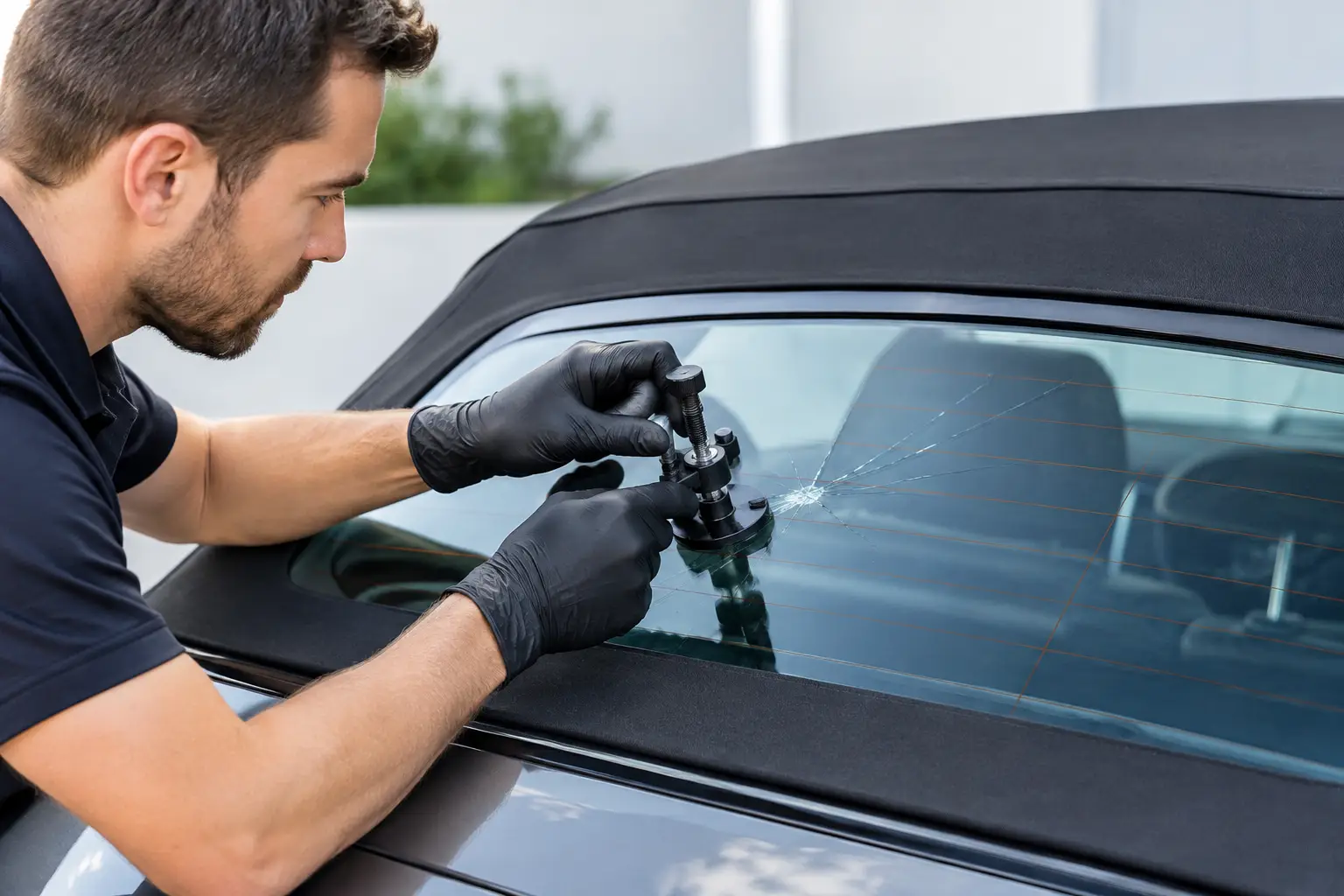
Repair Cracked Convertible Rear Window Properly
A crack in a convertible rear window is rarely just a cosmetic issue. When you need to repair cracked convertible rear window damage, the right decision protects more than the view behind you. It can prevent water ingress, reduce wind noise, preserve the hood’s shape and avoid a small defect becoming a full window failure.
Convertible rear windows work as part of a complete roof system. The window, surrounding hood material, stitching, seals and frame all move together every time the roof is opened or closed. That is why a quick patch may look acceptable at first but fail once the material is put under tension.
Can a cracked convertible rear window be repaired?
It depends on whether the rear window is flexible plastic or heated glass, where the damage sits, and how far the crack has progressed. A small surface mark on a plastic window may respond to careful polishing. A genuine split, deep crease or crack is different: polishing cannot restore the material’s strength.
On many older and classic convertibles, the rear screen is a clear plastic panel sewn or bonded into the soft top. These windows become brittle with age, ultraviolet exposure and repeated folding. Once the plastic has cracked, adhesive repairs are usually temporary. Heat, moisture and roof movement place constant strain on the repaired area, particularly around corners and zip or stitch lines.
Modern convertibles may use a heated glass rear window bonded into the hood. Cracked glass should generally be replaced, especially where the crack affects visibility, reaches the edge of the glass or compromises the heating elements. A windscreen-style chip repair is not normally the answer for a rear glass panel integrated into a soft top.
A proper inspection should establish whether the fault is isolated to the window or whether the hood has also shrunk, torn, distorted or begun separating at its seams. Replacing only the visible damaged piece without addressing the surrounding condition can create fresh tension and shorten the life of the work.
When replacement is the safer option
Replacement is often the most dependable way to repair cracked convertible rear window damage. This is especially true if the crack is spreading, the plastic has turned cloudy and brittle, or there are several creases around the fold lines. A clear rear window is a safety feature as much as a cosmetic one, particularly in rain, low light and busy car parks.
For a plastic rear window, a specialist may be able to replace the panel while retaining the existing hood, provided the fabric or vinyl remains sound. This can be a sensible repair for a well-maintained roof where the failure is limited to the window itself. The new panel must match the correct thickness, flexibility and profile for the vehicle. Material that is too rigid can crack prematurely; material that is too thin may distort or lack durability.
Where the hood fabric is faded, shrunken, torn, leaking or lifting from its frame, replacing the rear window alone may not represent good value. The vehicle may need a complete hood replacement instead. This is not about selling unnecessary work. It is about avoiding the cost of fitting a new window into a roof that can no longer support it correctly.
For glass rear windows, replacement usually involves careful removal of the hood assembly or controlled separation of the bonded glass section, depending on the vehicle design. Heated elements, mouldings, weather seals and bonding surfaces all need attention. Correct fitting matters because even a slight misalignment can affect roof operation, sealing and the finished appearance.
Why temporary fixes often disappoint
Clear repair tape, generic glues and DIY patch kits can be useful only as a short-term measure to keep rain out before a proper appointment. They are not a lasting solution for a cracked rear window. Most adhesives do not flex at the same rate as aged window plastic, and they can leave residue that makes later professional work more difficult.
A patch also changes how the window folds. When the hood is lowered, the repaired section may form a hard crease beside the crack. That concentrates pressure in an already weakened area. Singapore’s heat and humidity add further stress, as materials expand, soften and age under strong sunlight.
Trying to force a stiff roof down is another common cause of damage. If the rear window is cold, dry, heavily creased or visibly brittle, do not push it into its folded position. A specialist can advise on the condition of the hood and the correct operating approach after repair or replacement.
What proper rear-window work involves
Good workmanship begins before any material is cut. The roof is inspected for its fit on the frame, the tension around the rear bow, the condition of seals and the alignment of the side windows. This reveals whether the crack has a clear cause, such as a worn tension strap, poor drainage, deteriorated fabric or a roof mechanism that is not sitting correctly.
For a plastic window replacement, the old panel is removed without damaging the usable hood material around it. The replacement panel is then positioned accurately so the hood retains its intended shape and rearward visibility. Stitching, bonding or zip fastening must suit the original construction rather than a one-method approach for every car.
For glass, the process demands even more controlled handling. The correct glass specification, heating connections, bonding system and mouldings must be considered. Once fitted, the roof should be checked through its operating cycle, not simply left in the raised position. A convertible roof has to seal, fold and sit correctly in both states.
At 8 Cushion, convertible-top work is handled in-house, allowing the inspection, material selection and fitting quality to remain under one accountable workshop process. That matters when a rear-window fault may be connected to more than one part of the roof.
Choosing between a window-only repair and a full hood replacement
The best option is based on the condition of the entire assembly, not the age of the car alone. A premium or classic vehicle can often justify careful restoration of its original hood if the material is fundamentally sound. Conversely, a relatively newer roof may need broader replacement if poor storage, neglect or repeated water exposure has damaged its structure.
A window-only replacement is normally suitable when the hood remains supple, its seams are secure, the fabric has not significantly shrunk, and the frame and seals are working properly. It can restore visibility and extend the service life of the roof without unnecessary replacement.
A full replacement becomes more sensible when there are multiple leaks, widespread fading, frayed stitching, delamination, damaged lining, failing straps or a glass window that has detached from the hood. The higher initial cost can be more economical than repeated piecemeal repairs, particularly where labour is required to access the same roof components again.
Transparent advice should include the trade-off. There is no benefit in presenting a lower-cost repair as permanent when the roof’s overall condition indicates otherwise.
Protecting the replacement window
Once the work is complete, gentle care helps the new window last. Keep the window clean using products suitable for its material, and avoid abrasive cloths that create fine scratches. Clear plastic windows benefit from regular cleaning because grit can quickly dull the surface during wiping.
Do not lower the roof when the rear window is heavily soiled, unusually stiff or caught against an object in the boot area. Check that the roof folds into its intended position and that nothing presses against the window when stowed. Where the manufacturer specifies a folding method or protective separator, follow it.
Parking under cover whenever practical will reduce ultraviolet exposure and heat build-up. It will not eliminate normal ageing, but it can slow the drying and brittleness that leads to cracks in plastic panels and fatigue in hood materials.
A cracked rear window deserves a considered response, not a hurried cover-up. The most reliable result comes from matching the repair scope to the vehicle’s actual condition, then fitting materials with the care a moving convertible roof demands.
Related posts
How to Find Convertible Replacement Tops Near Me
Looking for convertible replacement tops near me? Learn what to check, what affe
Benefits of Repairing Car Trim Before It Spreads
Discover the benefits of repairing car trim early, from protecting cabin comfort
Windscreen Replacement Service Explained
Need a windscreen replacement service? Learn what matters, how the job should be