


How to Clean Fabric Convertible Tops Properly
A fabric roof can look clean from a distance while holding moisture, road film and grime deep within its weave. In Singapore’s heat and humidity, that build-up can quickly become uneven staining, green growth or a tired-looking hood. Knowing how to clean fabric convertible tops properly protects more than appearance: it helps preserve water repellency, stitching, seals and the value of the vehicle.
The key is restraint. A convertible soft top is not bodywork, and it should not be treated like one. Harsh detergents, stiff brushes and high-pressure water may produce a quick visual result, but they can damage fibres, strip protective treatments and force water where it does not belong.
How to Clean Fabric Convertible Tops Safely
Choose a cool, shaded area and work only when the roof is fully raised, latched and dry. Cleaning under direct sun causes solutions to dry too quickly, which can leave patches and make rinsing inconsistent. Avoid cleaning just before rain as well. The roof needs time to dry completely before it is folded down.
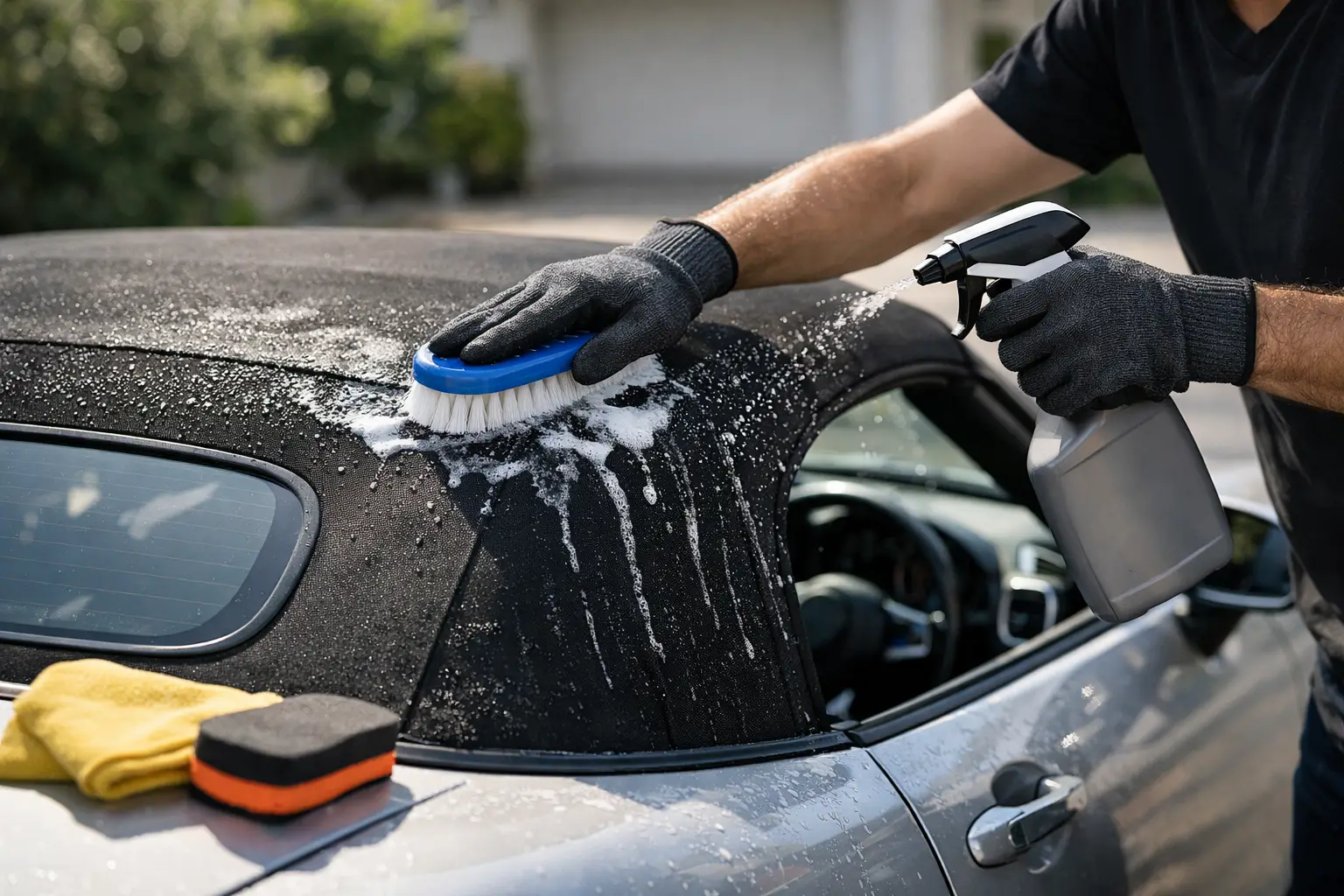
Start by removing loose dust, leaves and grit with a soft brush or a vacuum fitted with a gentle upholstery attachment. Pay close attention to the seams, the area around the rear window and the joins where the roof meets the body. These areas collect debris that can retain moisture and abrade the fabric over time.
Next, wet the roof evenly with clean, low-pressure water. A gentle hose flow is usually sufficient. Do not aim a pressure washer at seams, window edges, weather seals or drainage channels. Water driven into these points can lead to leaks, staining inside the car or damage to the roof’s bonded sections.
Apply a cleaner made specifically for fabric convertible roofs, following the dilution and dwell-time instructions carefully. General-purpose car shampoo, washing-up liquid, household cleaners and strong degreasers are poor substitutes. They may leave residue, affect the fabric’s colour or remove the water-repellent finish that helps the roof shed rain.
Work the product in with a soft convertible-top brush using light, overlapping strokes. There is no need to scrub aggressively. Let the cleaner do the work, particularly on a roof with ingrained traffic film. If a marked area remains after one gentle pass, repeat the process rather than increasing pressure with the brush.
Rinse thoroughly from the top down until the water runs clear. Cleaner left in the fabric can dry into streaks and attract further dirt. Then blot excess water with a clean microfibre towel and allow the hood to air-dry fully in the raised position.
The Right Cleaning Method Depends on the Roof Condition
Not every dull-looking fabric roof needs the same treatment. A lightly dusty roof usually responds well to careful cleaning and a fresh protective treatment. A roof with green growth, bird droppings, tree sap or heavy pollution may need more time and a product selected for that particular contamination.
Bird droppings should be softened with clean water and lifted away promptly. Do not rub dry residue across the fabric, as it can grind particles into the weave. Tree sap and oily marks are more complicated. Strong solvents may alter the roof’s finish or affect adhesives beneath the cloth, so test any specialist product on an inconspicuous area first.
White marks around folds or seams are not always dirt. They can be signs of worn waterproofing, old cleaning residue or stress within the fabric. Likewise, persistent damp patches inside the cabin may come from blocked drains, tired seals or a damaged roof structure rather than the outer fabric itself. Cleaning alone will not correct those faults.
For older, premium or restoration-worthy vehicles, it is sensible to have the roof assessed before using unfamiliar chemicals. The construction, fabric type, window material and previous repairs all affect the safest approach. Independent advice can prevent a small cosmetic concern from becoming an expensive replacement job.
Protect the Roof After Cleaning
Once the fabric is completely dry, apply a convertible-top fabric protectant designed to restore water repellency. This step matters because a clean roof without protection can absorb moisture more readily, particularly during frequent wet-weather use.
Apply the protectant evenly and avoid overspray on paintwork, glass, rubber seals and interior trim. Several light, controlled coats are generally better than one heavy application. Allow the roof to cure for the time stated by the product manufacturer before exposing it to rain or folding it down.
A properly protected fabric top should encourage water to bead and roll away rather than soaking into the material. That does not mean it is permanently waterproof. Protection gradually reduces with washing, weather exposure, parking conditions and age. If rainwater starts darkening the fabric quickly instead of beading on the surface, it is usually time to clean and reproof the roof again.
Common Mistakes That Shorten a Soft Top’s Life
The most common mistake is using too much force. Stiff household brushes can raise the fabric pile, create uneven texture and weaken delicate stitching. Another is relying on a high-pressure washer. Even when water does not enter the cabin immediately, repeated pressure around seams and seals can contribute to problems over time.
Avoid silicone-heavy dressings and tyre-shine products. They can leave a glossy, unnatural finish, attract dust and transfer onto clothing or interior surfaces. Steam cleaning is also not a default solution. Heat and moisture can affect adhesives, bonded windows and aged materials, especially on a roof that has already seen years of tropical weather.
Do not fold the roof while it is wet. Moisture trapped in the folds encourages mildew and can create stubborn crease marks. If the vehicle must be stored for a period, keep the roof clean, dry and fully raised where possible. A breathable cover may help in a protected parking space, but a non-breathable cover can trap condensation against the fabric.
A Sensible Maintenance Routine
For a regularly used convertible, inspect the roof during normal washing rather than waiting until it looks heavily soiled. Remove leaves and debris from the roof, seals and drain areas every week or two, especially after parking beneath trees. A gentle wash every few months is often enough for a well-kept car, while vehicles parked outdoors or used daily may need more frequent attention.
Look for fraying seams, loose threads, shrinking fabric, cracked window surrounds and water marks along the headlining. These details are easier and less costly to address early. It is also worth checking that the drains are clear, as blocked drainage can mimic a roof leak and allow water to enter areas that should remain dry.
At 8 Cushion, convertible-top work is handled with the same care applied to interior restoration: assess the material, identify the real cause of the problem and carry out the work in-house without shortcuts. A roof that remains stained after careful cleaning, leaks at the seals or shows damage around its structure needs specialist attention rather than another bottle of cleaner.
Treat the soft top as a fitted exterior trim component, not just a piece of fabric. Consistent gentle care will keep it looking correct, shedding water properly and ready for open-air motoring when the weather allows.
Related posts
How to Choose Convertible Hood Material
Learn how to choose convertible hood material with expert advice on fabric, viny

How to Assess Windscreen Chip Damage
Learn how to assess windscreen chip damage properly, spot repairable chips early
Choosing Replacement Car Seat Foam Properly
Choosing replacement car seat foam is about more than softness. Match density, t