


7 Signs of Windscreen Seal Failure
A windscreen rarely fails all at once. More often, the first clue is a faint whistle on the motorway, a damp smell after rain, or a small patch of moisture that keeps returning at the edge of the glass. These are common signs of windscreen seal failure, and they are easy to ignore until the problem spreads into the trim, headlining, dashboard area, or even the metal frame around the screen.
For many vehicle owners, the seal is out of sight and out of mind. Yet it plays a critical role in keeping water out, supporting proper fitment, reducing wind noise, and protecting the body aperture from hidden corrosion. On ageing cars, restored vehicles, and premium models where finish quality matters, a failing seal is not just a cosmetic issue. Left alone, it can turn a straightforward rectification into a more involved repair.
Why windscreen seals fail in the first place
Windscreen seals do not all fail for the same reason. In some cars, the rubber simply hardens with age and heat. In others, earlier glass work may have been done poorly, with inconsistent bonding, contaminated surfaces, or damage to surrounding trim during removal. Singapore’s climate also adds pressure. Constant UV exposure, heavy rain, and repeated heating and cooling cycles all accelerate material fatigue.
Vehicle type matters as well. Older cars may use more traditional rubber gasket systems, while newer vehicles often rely on bonded glass with mouldings and trims that can disguise early issues. A restoration car may also have previous body repairs, old paint edges, or non-original parts that affect how well the seal sits. That is why a proper assessment should always look beyond the visible rubber line.
The clearest signs of windscreen seal failure
Some warning signs are obvious. Others show up gradually and are often mistaken for unrelated trim or air-conditioning issues. If you notice one symptom, it is worth checking properly. If you notice several together, the screen area needs attention soon.
1. Water ingress after rain or washing
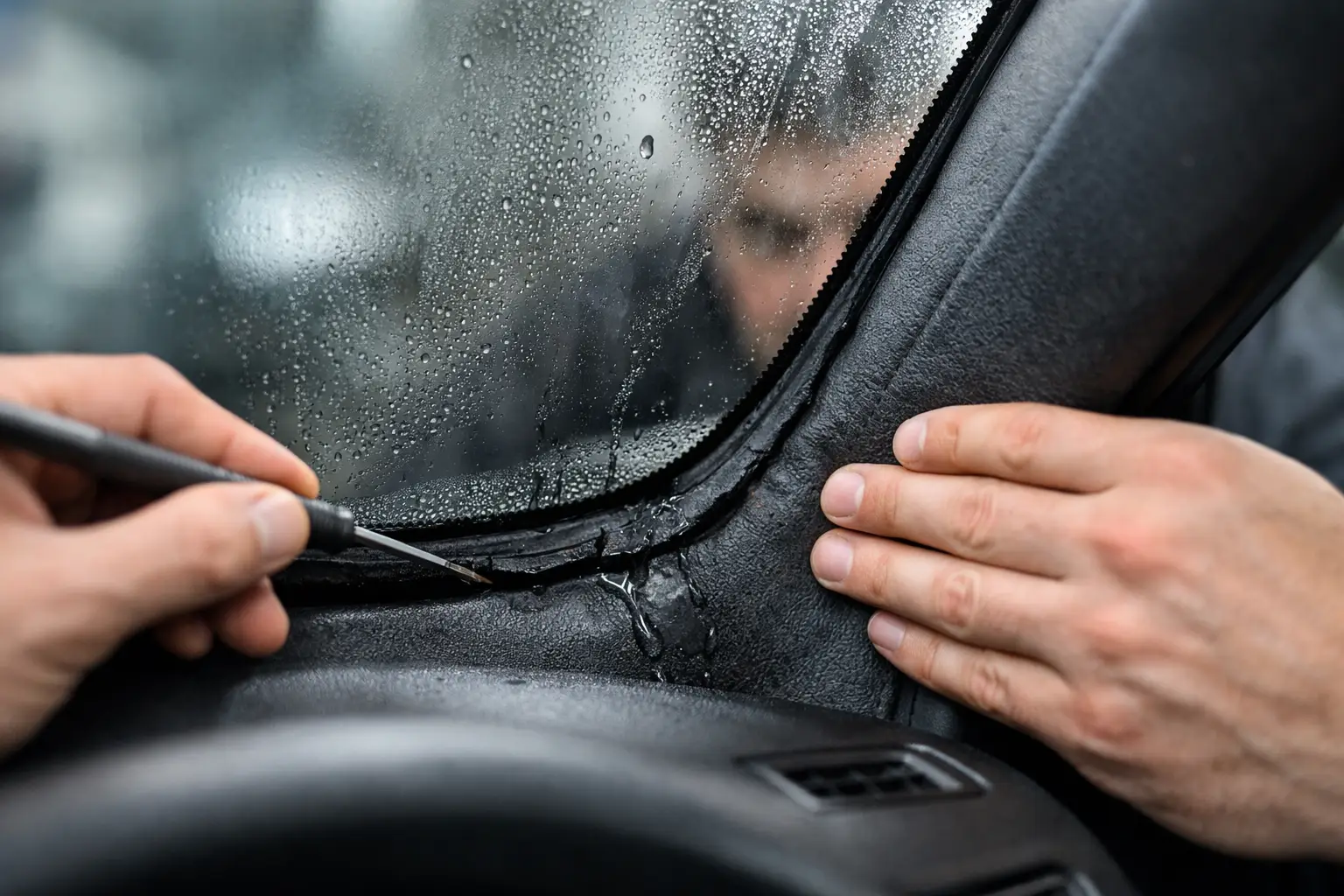
This is usually the first sign owners notice. You may see droplets forming along the inside edge of the windscreen, dampness near the A-pillars, or moisture collecting on the dashboard top. In some cases, the water does not appear directly below the leak point. It can travel behind trim and emerge elsewhere, which makes diagnosis more technical than it looks.
A minor leak does not always mean the whole windscreen must be replaced, but it should never be dismissed. Water entering the cabin can affect the roof lining, pillar trims, electronic components, carpet underlay, and interior smell. The earlier it is checked, the more options you usually have.
2. Persistent wind noise at speed
If a new whistling or rushing sound starts around the top or sides of the windscreen, especially at motorway speeds, the seal may no longer be sitting correctly. Sometimes the glass remains watertight for a while, but the bond or sealing edge has already weakened enough to let air pass.
This is where guesswork causes problems. Some owners assume the noise is from door rubbers, mirrors, or roof trim. Sometimes it is. But when the sound changes with crosswinds or seems concentrated around the screen perimeter, the windscreen seal deserves inspection.
3. Visible gaps, lifting, or shrunken rubber
On vehicles with exposed rubber seals or outer mouldings, visual changes are a strong warning sign. The rubber may look dry, cracked, flattened, or pulled away at the corners. You might also notice sections that sit unevenly against the body or glass.
Not every outer trim issue means the structural seal has failed. On some bonded windscreens, the visible moulding is partly cosmetic. Even so, loose or deteriorated trim should not be brushed off. It can point to ageing materials, poor previous installation, or movement in the screen assembly.
4. Misting that keeps returning
If the inside of the windscreen fogs up more than usual and takes longer to clear, trapped moisture may be entering from a failed seal. This is especially suspicious when the car has no obvious drink spillage, carpet wetness from footwear, or air-conditioning fault.
Repeated interior misting is not just an annoyance. It often means moisture has already been entering for some time. In vehicles with premium interior finishes or restoration work, that hidden damp can do more damage than owners realise.
5. Rust around the windscreen aperture
Rust is one of the most serious signs of windscreen seal failure. It may first appear as bubbling paint, staining near the edge of the screen, or slight lifting of surrounding trim. The danger is that corrosion often starts beneath the seal line, where it stays hidden until removal.
Once rust forms around the aperture, the job stops being a simple sealing issue. The metal surface must be assessed properly, cleaned back, repaired where necessary, and prepared correctly before refitting. Trying to seal over corrosion is not a durable solution. It usually leads to recurring leaks and a poorer finish later.
6. Loose trim or movement around the glass
A windscreen should feel properly seated. If surrounding trims begin to loosen repeatedly, or if there is any sense that the screen area has movement it should not have, that calls for immediate inspection. In some cases, owners notice rattles over uneven roads or pressure changes when closing doors.
There is an important distinction here. Loose trim alone may be a trim retention issue. But if it appears together with noise, leaks, or visible separation at the glass edge, the windscreen fitment may be compromised. This is not the area for temporary adhesives and home fixes.
7. Evidence of a poor previous replacement
Many seal failures begin with workmanship issues rather than age alone. Uneven bead lines, damaged mouldings, excess adhesive, scratched pillars, or misaligned trims can all suggest the previous windscreen installation was not carried out to specialist standard.
If a car has had glass replaced before and problems begin soon after, the seal system should be examined as a whole. Surface preparation, curing conditions, adhesive choice, and handling discipline all affect long-term performance. Good results come from process control, not speed.
What happens if you leave it too long
A leaking or poorly sealed windscreen rarely stays as a small problem. Water can wick into the headlining, soften adhesives, mark interior trim, and create odours that are difficult to eliminate fully. On some vehicles, electronics in the upper cabin or dashboard region may also be at risk.
The larger issue is hidden deterioration. By the time water marks become obvious, corrosion may already be forming beneath the glass edge. That can increase repair scope, affect refinishing work, and add cost that could have been avoided with earlier intervention. For owners of older, premium, or restoration-worthy cars, preserving the aperture condition is especially important.
When repair is possible and when replacement is the better route
It depends on the actual cause. If the issue is limited to an outer moulding or non-structural trim piece, a targeted repair may be enough. If the bonded area has failed, the screen may need to be removed so the aperture can be inspected, cleaned, and prepared properly before refitting or replacing components.
This is where specialist judgement matters. Not every leaking windscreen needs the cheapest quick sealant pass, and not every one needs full replacement without inspection. A disciplined workshop will assess the vehicle condition, previous work quality, surrounding trims, and any signs of rust before recommending a course of action.
Why specialist handling matters
Windscreen work sits at the intersection of glass fitment, trim handling, sealing, and finish quality. On paper, it can look simple. In practice, careless removal can crack trims, mark pillars, damage headlining edges, and turn a contained job into a more expensive one.
For that reason, experienced owners usually prefer a workshop that treats the surrounding materials with the same attention as the glass itself. That is particularly relevant on cars with delicate interior finishes, ageing clips, convertible roof details, or restoration-sensitive trim. At 8 Cushion, this kind of work is approached as a specialist workshop task, with in-house control and no hand-off of core workmanship.
Signs of windscreen seal failure you should not ignore
If your car shows repeated misting, unexplained dampness, wind noise, or visible seal deterioration, the right next step is a proper inspection rather than trial-and-error fixes. The longer moisture sits around the windscreen aperture, the less predictable the eventual repair becomes.
A sound windscreen seal protects more than the edge of the glass. It protects the finish, the cabin, and the long-term condition of the vehicle. If something feels different after rain, after a wash, or at speed, trust that instinct and have it checked before a small fault spreads further.
Related posts
Car Seat Reupholstery Options That Last
Compare car seat reupholstery options, from fabric and leather to repairs and fu
Vintage Dashboard Restoration Done Properly
Vintage dashboard restoration protects the character, safety and value of a clas
Best Car Seats Repair Solutions for Lasting Comfort
Compare the best car seats repair solutions for worn leather, torn fabric and co