


How to Spot Roof Lining Delamination
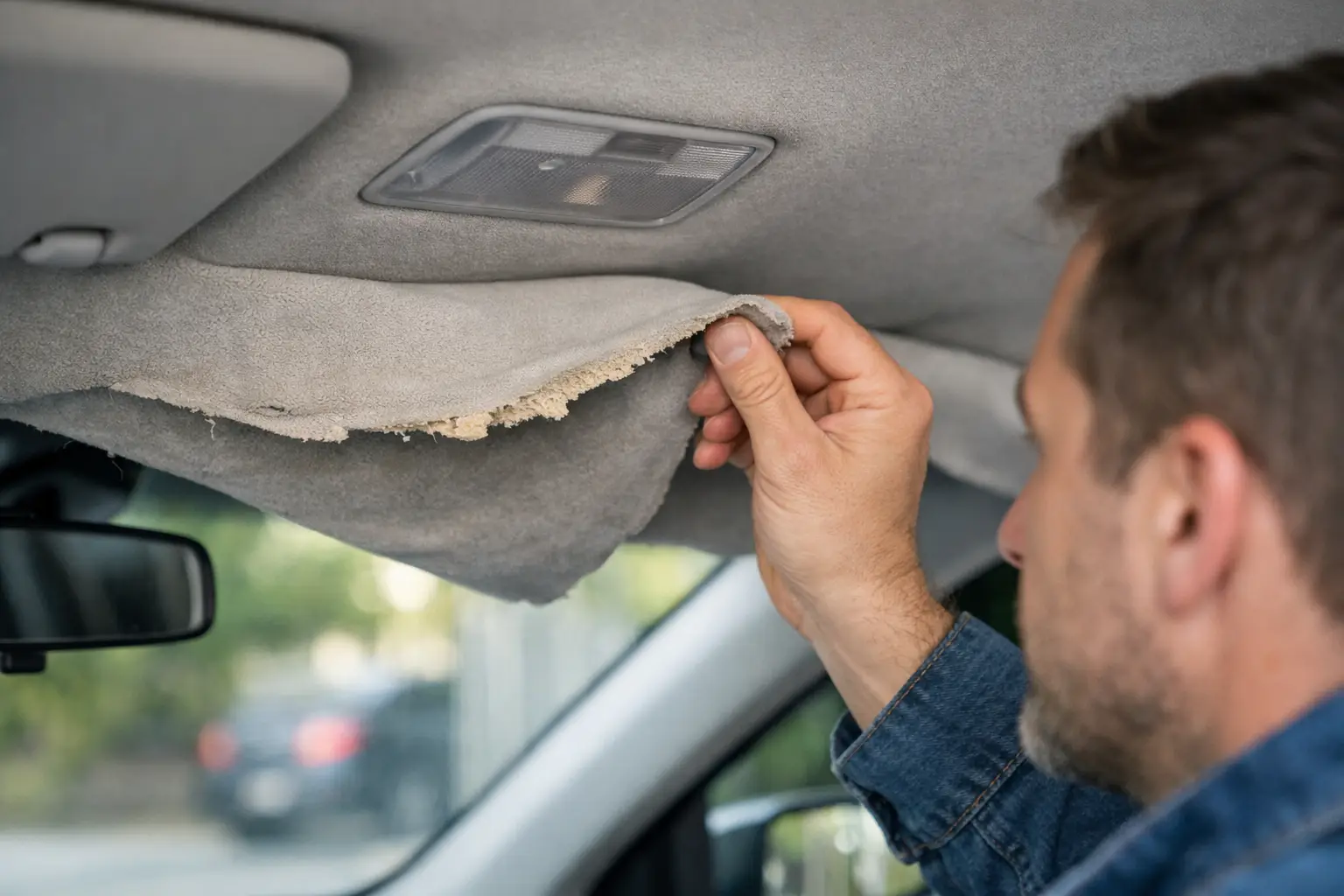
A roof lining rarely fails all at once. It usually starts with a slight droop near the rear edge, a small ripple above a door, or fabric that feels looser than it used to. If you are wondering how to spot roof lining delamination before it turns into a full sagging headliner, the earliest signs are often subtle but very consistent.
For owners who care about cabin condition, this matters for more than appearance. A failing roof lining can make the interior feel tired, drop dust and degraded foam into the cabin, interfere with visibility, and reduce the overall standard of a well-kept vehicle. On premium, ageing, or restoration-worthy cars, leaving it too long often means a bigger job later.
What roof lining delamination actually is
Roof lining delamination happens when the fabric separates from the backing board because the foam and adhesive between them have broken down. In most cases, the visible issue is not the cloth itself. The real failure is underneath, where age, heat, humidity, and material fatigue cause the foam layer to crumble.
That is why many roof linings look acceptable one month and noticeably worse the next. Once the bond starts to fail, gravity does the rest. In Singapore’s climate, heat exposure and trapped cabin moisture can speed that process up, especially for vehicles parked outdoors or used infrequently.
It is also worth knowing that delamination is different from staining, water damage, or impact damage, although these can appear together. A correct diagnosis matters because the repair approach is not the same in every case.
How to spot roof lining delamination early
The most obvious sign is sagging, but early delamination often appears before the lining actually hangs down. You may notice a soft wave in the fabric, usually around the edges, dome light area, grab handles, or rear section of the roof. These are common stress points where the bond starts to give way first.
Another sign is a change in surface tension. A healthy lining sits flat and evenly stretched. A delaminating one can look slightly ballooned, uneven, or loose when viewed from an angle. In lighter interiors, this can show up as shadowing or shallow creases rather than dramatic sagging.
Texture is another clue. If you gently press the lining and it feels spongy, powdery, or inconsistent from one section to another, the foam beneath may be degrading. In advanced cases, touching the surface can disturb the failed foam and leave fine dust behind.
You should also pay attention to trim areas. If the roof lining is starting to pull away near the windscreen edge, C-pillars, sun visors, or around interior lights, that usually points to adhesive and foam failure rather than a simple cosmetic issue. Once separation starts around these fixed points, the rest of the panel often follows.
Signs that are commonly missed
Not every failing roof lining looks dramatic. One of the most missed warning signs is a slight drop around interior accessories. If the fabric no longer sits neatly around lights, handles, or visor mounts, there may already be movement in the material.
A musty smell can also be part of the picture, though it depends on the cause. Delamination itself does not always create an odour, but if the lining has trapped moisture or the backing has been exposed to damp conditions, the interior can start to smell stale. This is where a specialist inspection is useful, because water ingress from seals or a windscreen issue can mimic or worsen headlining problems.
Another overlooked sign is recurring DIY reattachment. If someone has pinned, glued, or tucked the fabric back into place before, what looks acceptable at first glance may still be a failed roof lining. Surface fixes rarely address the crumbling foam underneath, so the lining tends to sag again, often worse than before.
What roof lining delamination is often mistaken for
A stained roof lining is not always delaminated. Marks from old leaks, smoke, or age can affect appearance while the fabric bond remains intact. Equally, a lining can be delaminating even if it still looks clean.
Vehicles with sunroofs, older windscreens, or previous bodywork may also show symptoms caused by water ingress. If moisture has entered from above, the roof lining may sag, discolour, or distort, but the underlying problem may not be age-related delamination alone. In those cases, replacing the lining without addressing the leak is only half a repair.
There is also a difference between a detached trim edge and a failed headliner panel. Sometimes a pillar trim or rubber seal moves and makes the roof lining look loose. A proper assessment checks the board condition, foam layer, surrounding trim, and any signs of water or heat damage before deciding on the right work scope.
When the problem is beyond a simple fix
If the fabric has fully dropped, the foam has usually turned brittle and dusty. At that stage, spraying fresh adhesive onto the visible surface is not a proper repair. It may hold briefly, stain the fabric, or create uneven tension, but it will not restore the failed substrate.
Pins and clips are also a short-term workaround, not a restoration. They can distort the board, mark the material, and make later repair more difficult. On some vehicles, especially premium models or restorations, that kind of shortcut does more harm than good.
The condition of the backing board matters as well. If the board has warped, cracked, or been damaged during a previous removal, a straightforward recover may no longer be possible. This is one reason specialist interior workshops remove, inspect, prepare, and retrim the panel carefully rather than treating every sagging lining as the same job.
How specialists assess roof lining failure
When assessing how to spot roof lining delamination properly, professionals do more than look for sagging cloth. They check where the failure starts, how far it has spread, whether the board remains structurally sound, and whether there are contributing issues such as heat stress, water entry, contaminated surfaces, or prior repair attempts.
Material choice also matters. Not every replacement fabric performs the same way, and not every adhesive is suitable for long-term cabin heat exposure. A proper repair depends on stripping failed material fully, cleaning the board thoroughly, selecting the right automotive headlining material, and refitting with disciplined preparation.
That process is not glamorous, but it is what separates a roof lining that sits correctly for years from one that starts failing again far too soon. For owners who value workmanship, this is where in-house control makes a clear difference.
Repair or replacement – what depends on the vehicle
In many cases, the practical solution is to remove the old lining and retrim the original board with fresh material. That restores the appearance and addresses the root cause, assuming the board is still usable.
If the board is damaged, the fabric is uncommon, or the car is part of a restoration project, the approach may need to be more careful. Matching colour, texture, and fit can be straightforward on some vehicles and much more involved on others. Coupes, saloons, MPVs, and vehicles with sunroofs all present slightly different challenges during removal and refit.
The right decision also depends on the standard you want. If the car is simply a daily runabout, your priority may be a tidy, durable finish. If it is a cherished car, executive model, or collector vehicle, material presentation and trim integrity matter more. Neither approach is wrong, but the work should match the vehicle and your expectations.
When to act
The best time to deal with delamination is when you first see movement in the fabric, not when the entire roof lining collapses. Early action usually means cleaner removal, better preservation of surrounding trim, and fewer secondary issues inside the cabin.
If you are unsure, have it inspected before trying a DIY adhesive or pin fix. A disciplined workshop can tell you whether the issue is standard age-related delamination, moisture-related damage, or part of a larger interior deterioration problem. That clarity saves time and avoids paying twice.
At 8 Cushion, this kind of assessment is treated as specialist trim work, not a generic repair. That matters because roof lining failures are rarely solved well by shortcuts.
If your cabin ceiling looks a little looser, softer, or more uneven than it should, trust that instinct. Roof lining delamination nearly always gives a warning before it fully lets go, and catching it early is the simplest way to keep the interior to the standard your vehicle deserves.
Related posts

Restoration Versus Replacement Upholstery
Restoration versus replacement upholstery - learn when to repair, retrim or repl
What Causes Convertible Top Leaks?
Learn what causes convertible top leaks, from worn seals to blocked drains, and
Water Damaged Car Interior Repair Guide
Water damaged car interior repair starts with fast action. Learn what can be sav