


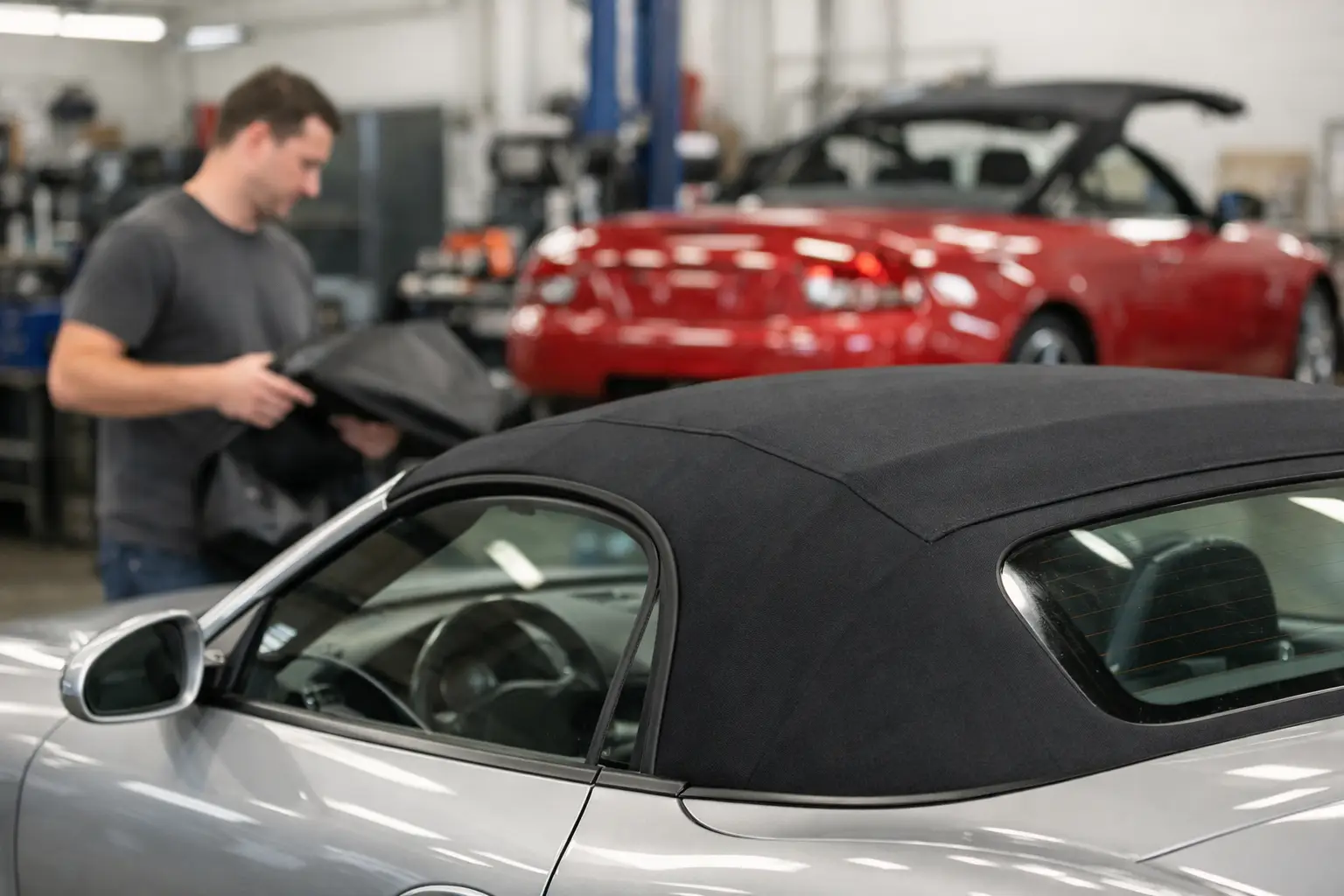
How to Find Convertible Replacement Tops Near Me
A convertible roof rarely fails all at once. It usually starts with a tighter-than-usual fold, a damp patch after rain, a loose edge near the window line, or fabric that has lost its shape under Singapore heat. If you are searching for convertible replacement tops near me, you are probably already past the stage of routine cleaning and hoping the issue will settle on its own.
At that point, the real question is not just where to replace the top. It is who should handle it, how the work should be assessed, and whether the roof needs a full replacement or a more targeted repair. With convertible systems, small mistakes show up quickly – in wind noise, leaks, poor tension, misaligned windows, or a roof that simply does not sit right.
What a proper convertible top replacement really involves
A convertible roof is not just a sheet of fabric stretched over a frame. It is a fitted system made up of outer material, inner linings, seals, stitching, tension points, drains, frame geometry and, in some vehicles, electrical or hydraulic operation. Replacing the visible outer skin without understanding the rest of the assembly can leave you with a car that looks acceptable from a distance but performs poorly in daily use.
That is why specialist handling matters. A proper workshop will assess how the roof opens and closes, whether the frame is straight, whether the channels are draining correctly, and whether the glass, seals and weather edges are still serviceable. Sometimes the top is the main problem. Sometimes the top has been damaged by another issue that needs to be corrected first.
For owners of premium, ageing, or restoration-worthy vehicles, this distinction matters even more. A rushed fitment can reduce comfort and appearance at the same time. A disciplined replacement restores both.
When to search for convertible replacement tops near me
Not every worn roof needs immediate replacement, but some symptoms should not be ignored for long. Water ingress is the obvious one, especially if it is starting to affect carpets, trim, electronics or rear parcel areas. The longer moisture stays inside the car, the wider the repair bill can spread.
Shrinking fabric is another common trigger. Once the material loses flexibility or tension, the roof may stop latching cleanly, pull unevenly around the frame, or create stress around seams and edges. Rear screens can also become cloudy, detached, or distorted, making replacement more practical than repeated patching.
There is also the appearance factor, which is not just cosmetic. Fading, fraying, bubbling, loose stitching and worn contact points often indicate age across the whole assembly. If the car is one you intend to keep, restore, or protect for resale, delaying too long can make the surrounding components harder to preserve.
Repair or full replacement – it depends on the condition
This is where honest workshop advice matters. Some roofs do benefit from repair. A separated seam, a localised tear, a lining issue, or a damaged seal may be addressed without replacing the full top. That can be the right decision if the material is otherwise sound and the frame remains properly aligned.
But repair has limits. If the fabric has hardened, the stitching has aged across multiple sections, or the fit has already deteriorated around key tension areas, a partial fix may only buy a short period before the next failure. In those cases, full replacement is often the more sensible long-term option.
A trustworthy specialist should be clear about that trade-off. The cheapest immediate answer is not always the most economical one. Paying twice for repeat interventions is rarely good value.
What to look for in a specialist workshop
When people search for convertible replacement tops near me, location feels urgent. That is understandable. But convenience alone should not decide the job.
Convertible top work is specialist trim and restoration work, not a routine mechanical service. The workshop you choose should be able to explain what material options suit your vehicle, what can be retained, what should be renewed, and how the finished roof should sit when closed and when folded. They should also be comfortable discussing fit, drainage, sealing and interior finishing – not only the outer appearance.
In-house execution is a major advantage here. When assessment, preparation, trimming and installation are handled under one roof, quality control is tighter and accountability is clearer. There is less room for miscommunication, less dependence on third parties, and fewer middleman mark-ups built into the final price.
That matters in practice. A workshop-led process usually means better consistency from inspection to handover, especially on vehicles where condition varies from one car to the next.
Why material choice affects the result
Not all replacement tops are equal, even when they look similar in photos. Material quality affects fit, durability, road noise, thermal comfort and how the roof ages over time. The correct material also depends on the vehicle, how it is used, and whether originality is a priority.
For some owners, the goal is faithful restoration. For others, it is dependable daily use in a hot, humid climate. Those are not always the same thing. A good specialist will explain the options plainly and recommend what suits the car, rather than pushing a standard answer onto every job.
Storage and handling matter too. Trim materials can be affected by poor storage conditions, contamination and careless preparation before installation. That part is often invisible to customers, but it directly affects the final finish. Good workmanship starts long before the roof goes onto the car.
Cost matters – but scope matters more
One of the most common questions is price. That is fair, but convertible top replacement is not a one-price service across all makes and models. The cost depends on vehicle design, roof material, frame condition, whether seals or linings need attention, and how much preparatory work is required.
If one quotation is far lower than another, it is worth asking what has been included and what has not. Does the price cover removal and proper refitting? Are worn ancillary parts excluded? Is the work being outsourced? Is the material equivalent to the original standard? Those details can easily explain the gap.
Transparent pricing is usually a sign of a disciplined workshop. Clear scope, realistic lead time and plain advice give customers peace of mind from the very beginning. That is more useful than an attractive number that grows once the job is underway.
The local factor in Singapore
For Singapore drivers, climate is hard on convertible roofs. Heat, humidity, UV exposure and frequent rain all accelerate wear, especially on cars that spend time outdoors. Even when a top still looks presentable, the material may already be losing flexibility or its sealing performance.
That is one reason local workshop experience matters. A specialist working regularly on convertible tops in Singapore will have a practical view of how materials behave here and what owners typically face after years of exposure. They will also understand that many of these vehicles are not just transport. They are enthusiast cars, cherished cars, or premium cars where finish and correctness matter.
At 8 Cushion, that specialist approach is central to the work. Convertible top replacement is handled as a craft-led workshop service, with in-house control, direct consultation and no outsourcing of the core job. For owners who want a serious assessment rather than a quick guess, that model makes a real difference.
Questions worth asking before you commit
Before approving the work, ask whether the roof needs full replacement or targeted repair, what material is being proposed, whether the frame and seals have been checked, and what result you should realistically expect. If your car has restoration value, also ask whether the recommendation prioritises originality, durability, or a balance of both.
A good workshop will not be irritated by those questions. They should welcome them. Customers making careful decisions are usually the ones who value proper workmanship.
If the answers sound vague, or if the discussion stays at the level of surface appearance only, that is usually a warning sign. Convertible roofs are too specialised for guesswork.
The right replacement top should do more than make the car look tidier. It should close properly, seal properly, sit correctly and give you confidence each time the weather turns. When you search for a specialist nearby, look beyond distance and start with workmanship. The best result is not the fastest booking. It is the roof that feels right every time you drive the car.
Related posts
How Long Does Windscreen Replacement Take?
How long does windscreen replacement take? Most jobs take 1-2 hours, but curing
Mercedes Bolster Restoration: Repair or Replace?
Mercedes bolster restoration protects comfort, appearance and value. Learn when
Restoration Versus Replacement Upholstery
Restoration versus replacement upholstery - learn when to repair, retrim or repl