


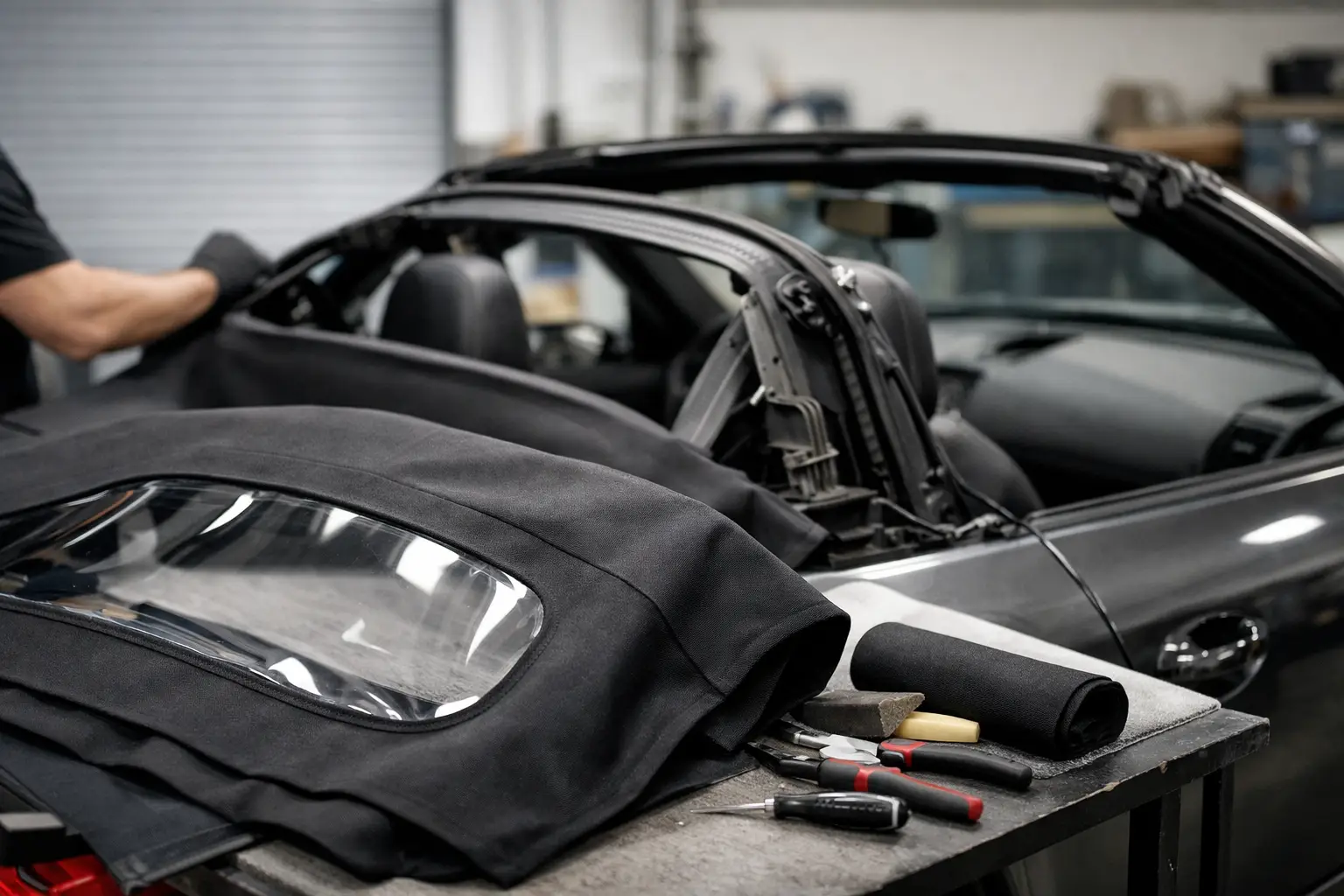
Convertible Top Replacement Buyer Guide
A tired soft top changes more than how a car looks. Once the fabric shrinks, the stitching opens, or the seals stop doing their job, you start hearing more road noise, noticing damp smells, and worrying every time the weather turns. A proper convertible top replacement buyer guide should help you avoid guesswork, because this is not a trim job to buy on looks alone.
For most owners, the real question is not simply whether to replace the roof. It is what to replace it with, who should do the work, and how to avoid paying twice for a result that never fits properly in the first place. On convertibles, small errors in pattern, material handling, frame alignment or tensioning quickly become obvious.
What a convertible top replacement buyer guide should cover
A good buying decision starts with the right scope. Some roofs are failing only at the outer skin, while others also have worn tension cables, tired pads, cracked seals, damaged rear screens or frame issues that a new top alone will not solve. If the workshop does not inspect the whole system, the quote may look attractive at first and become expensive later.
This is why specialist assessment matters. A roof is part material, part mechanism. If the frame geometry is off, if drains are blocked, or if previous repairs were poorly done, a replacement top can still sit badly, crease too early or leak. Buyers should expect clear advice on whether they need a straightforward replacement, a more complete refurbishment, or a restoration-led approach.
Choosing the right roof material
Material is where many buyers focus first, and understandably so. It affects appearance, lifespan, cleaning requirements, cabin noise and cost. But there is no single best material for every car.
Vinyl is often the lower-cost route and can suit some everyday vehicles well. It is generally easier to clean and can present a tidy finish when fitted correctly. The trade-off is that it may not give the same premium look or long-term texture retention as a higher-grade cloth roof, especially on prestige or enthusiast-owned cars where originality and finish matter.
Mohair or canvas-style fabric is usually the preferred option for owners who want a more refined appearance and a result closer to many factory specifications. It tends to look richer and more appropriate on premium convertibles and restoration projects. The trade-off is price, and also the need for correct care. Better material still needs proper installation and proper storage before fitting. Even a high-grade top can disappoint if it has been folded badly, mishandled or fitted without discipline.
If originality is important, ask whether the replacement closely matches factory grain, weave, colour and stitching layout. This matters for vehicle value and visual correctness, especially on older European convertibles or collector-owned cars.
Fit matters more than many buyers realise
A convertible top is not like a generic cover that can be stretched into place. Pattern accuracy matters. So do tension points, side cable placement, seam alignment and how the material settles over time.
This is where buyers should be careful with cheap parts that promise compatibility across too many model years or variants. A roof that is almost right often becomes a roof that whistles at speed, pools water, rubs at the frame, or leaves the side windows struggling to seal. Good fit is not only about appearance from ten feet away. It is about weather resistance, cabin comfort and how the roof behaves after months of opening, closing and exposure.
An experienced workshop will also know that some vehicles need staged fitting and settling, not rushed installation. Tension must be correct from the start, but the process should still respect the material, the frame and the specific model.
Glass or plastic rear window
Rear window choice can affect both budget and usability. Some older cars use plastic windows, while many newer convertibles use heated glass rear screens integrated into the roof.
Plastic windows are lighter and may suit classic cars where originality matters. They are, however, more vulnerable to scratching, hazing and folding marks. Owners need to be realistic about care requirements.
Glass rear screens usually offer better visibility, durability and day-to-day convenience, especially if demisting is important. But they add complexity. The bond between roof and glass, the alignment, and the surrounding material tension all need to be handled properly. If this section is poorly executed, the result may look acceptable briefly and fail early around the edges.
The labour is not a minor part of the bill
One of the most common mistakes buyers make is comparing roof replacement quotes as if the material is the whole product. It is not. Labour quality is often the difference between a roof that lasts and one that becomes a recurring problem.
A proper replacement may involve removal of trims, inspection of frame points, transfer or replacement of cables and pads, sealing work, alignment checks, drainage review and careful reassembly. On some models, access is tight and the risk of damaging surrounding trim is real if the job is rushed. That is why specialist in-house work matters. The more critical steps that are passed around or outsourced, the harder it becomes to control quality and accountability.
Buyers should ask what exactly is included in the labour scope. Does the quote include frame inspection? Are worn ancillary components flagged before work begins? Is the roof fitted, tensioned and tested by the same specialist team handling the rest of the job? Clear answers usually indicate a disciplined workshop.
How to read a quote properly
A low headline price can hide a very narrow scope. A higher quote may actually represent better value if it includes the parts and process needed for a durable result.
Look for detail. The quote should state the roof material specification, whether seals or cables are included, whether the rear screen is part of the assembly, and whether any rectification of frame or fitment issues is covered. If these items are vague, ask before approving the job.
You should also be wary of pricing that treats every convertible as broadly the same. Model complexity, parts availability, roof construction and previous repair history all affect cost. A serious workshop will explain this rather than force a one-size-fits-all figure.
Questions worth asking before you commit
Any useful convertible top replacement buyer guide should help you ask better questions, not just compare prices. Ask whether the replacement material suits your exact model and intended use. Ask whether the fitment is based on experience with that roof type. Ask what condition the frame and seals are in. Ask how the material is stored before installation. Ask who will actually carry out the work.
These questions are not about being difficult. They are how you separate specialist workmanship from a superficial trim swap. A disciplined answer will usually be calm, direct and specific.
When repair may be enough – and when it is not
Not every roof needs full replacement. A localised seam issue, minor separation, or a small trim fault may sometimes be repaired sensibly. If the fabric still has strength, the frame is sound, and the seals are performing well, repair can be the right decision.
But there is a point where repair becomes false economy. If the material is aged throughout, if shrinkage is affecting fit, if multiple areas are failing, or if water ingress has started, replacement is usually the better long-term choice. Good advice should be independent of the biggest invoice. That is part of proper workshop integrity.
A practical standard for choosing the right workshop
Choose the workshop the same way you would choose the roof itself – by looking at control, not just claims. You want a specialist that understands convertible construction, explains trade-offs clearly, and handles the work in-house with accountability. For owners who value workmanship over shortcuts, that standard matters far more than a polished sales line.
At 8 Cushion, that is the benchmark we believe customers should expect from the very beginning. A convertible roof replacement should leave you with confidence when the car is parked in the sun, driven in heavy rain, or kept for years to come. Buy with that standard in mind, and the right choice usually becomes much clearer.
Related posts
Windscreen Replacement Service Explained
Need a windscreen replacement service? Learn what matters, how the job should be
How to Clean Fabric Convertible Tops Properly
Learn how to clean fabric convertible tops without causing stains, fading or wat
How to Choose a Windscreen Replacement Properly
Learn how to choose windscreen replacement for your vehicle, from correct glass