


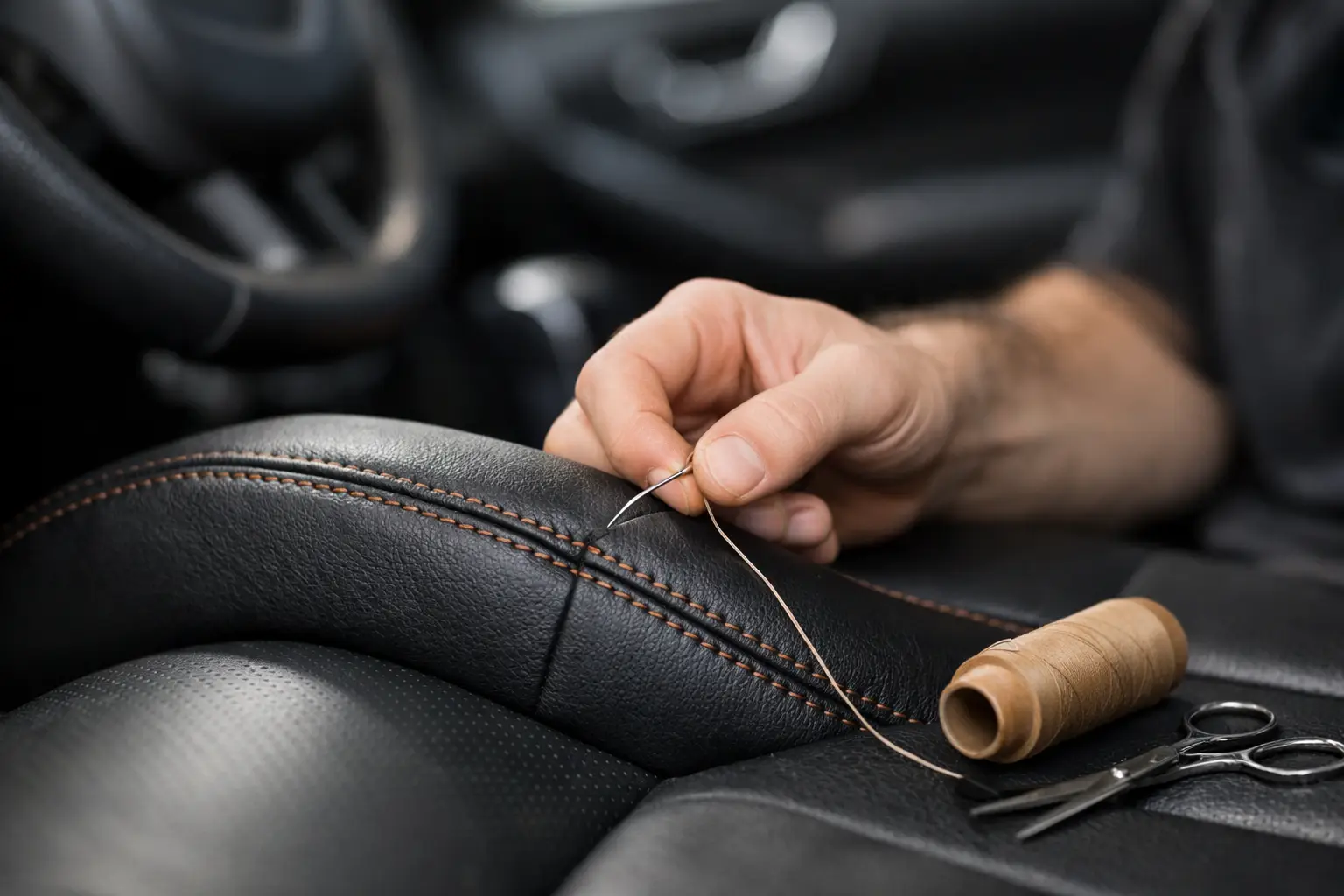
Car Seat Stitching Repair Service That Lasts
A loose seam on a car seat rarely stays a small problem. Each entry and exit puts more strain on the surrounding panel, allowing the opening to widen, the foam beneath to become exposed and the upholstery to lose its original shape. A professional car seat stitching repair service deals with more than the visible thread. It restores the strength, alignment and finish that allow the seat to perform properly over time.
For owners of premium, ageing or restoration-worthy vehicles in Singapore, the right repair can preserve an original interior that may be difficult or costly to replace. The wrong repair can leave uneven seams, damaged material edges and a result that looks temporary from the first day.
Why seat stitching fails
Stitching is a working part of the upholstery, not simply a decorative line. It holds shaped panels under tension while the seat is supporting the driver or passenger. Over years of use, that tension is affected by body movement, heat, humidity, friction from clothing and repeated pressure on the bolster when getting in and out.
The outer bolster on the driver’s seat is often the first area to show wear. Thread may fray or snap, especially where leather, fabric or synthetic trim flexes around a curved edge. In other cases, the thread remains intact but the material itself tears beside the seam. This distinction matters. Restitching a weakened material edge without reinforcing or repairing it can result in another failure shortly afterwards.
Water exposure, harsh cleaning chemicals and previous low-quality repairs can also contribute. A seat may have been restitched with thread that is too fine, too weak or unsuitable for automotive use. It may look tidy initially, but it will not necessarily cope with the original load placed on the seam.
What a car seat stitching repair service should address
A proper car seat stitching repair service begins with an assessment of the entire affected section. The visible split is only one part of the job. A specialist should check whether the adjacent upholstery is stretched, whether the seam allowance has deteriorated and whether the foam or backing beneath has lost its form.
The repair approach depends on the condition of the material. If the leather or fabric is structurally sound, carefully reopening the local seam, aligning the original panels and restitching with suitable automotive thread may be sufficient. The goal is to follow the original stitch path, spacing and tension as closely as practical.
Where the panel edge has torn or become thin, the stronger option may involve rebuilding the seam area or replacing a local section of upholstery. This is more involved, but it avoids pulling new stitches through compromised material. On a heavily worn seat, a partial panel replacement may give a more durable and visually balanced result than attempting to conceal extensive deterioration.
Original construction also matters. Some seats use piping, contrast thread, perforated leather, French seams, pleats or shaped bolsters. These details must be handled with care. A repair that ignores them may hold the seat together but still reduce the quality and value of the interior.
The difference between a quick fix and a lasting repair
A quick fix usually concentrates on closing the gap. A lasting repair considers why the gap opened and whether the surrounding upholstery can support a new seam. This is where workshop discipline makes a real difference.
Seat covers often need to be partially or fully removed to access the seam correctly from behind. Working only from the surface may produce an uneven line, leave unsecured edges or make it difficult to maintain the seat’s original contour. Proper access allows the technician to inspect backing materials, reinforce the area where appropriate and stitch with controlled tension.
Thread selection is equally important. Automotive upholstery needs thread that is suited to regular flexing and exposure to heat. The colour must also be chosen carefully. On black or dark interiors, a near match can still appear obvious under direct light if the thread has a different sheen or tone. On contrast-stitched seats, accuracy becomes even more visible.
There are sensible limits to any repair. A small split in healthy leather can often be restored cleanly. Cracked, hardened or extensively faded leather may need broader restoration work to achieve a consistent finish. An experienced specialist will explain this trade-off clearly rather than promising that every worn seat can be made to look factory-new.
When repair is the right option
Repair is often the practical choice when damage is localised and the rest of the seat remains in good condition. It helps retain original materials, patterns and fit, which is particularly valuable for vehicles with distinctive trim or difficult-to-source upholstery. It also prevents a minor defect from developing into a larger tear requiring replacement of a full panel.
For classic and enthusiast vehicles, preserving original upholstery can be preferable to fitting a generic replacement cover. Original trim contributes to the character of the cabin, and an accurate local repair can maintain that authenticity while improving usability.
However, repair is not always the most economical long-term route. If multiple seams are failing, the foam has collapsed, or the leather is brittle across several panels, a more comprehensive restoration may offer better value. The decision should be based on the actual condition of the seat, how the vehicle is used and the standard the owner expects.
What to look for before booking the work
The most reassuring provider is not necessarily the one offering the fastest answer from a photograph. Images are useful for an initial discussion, but a physical inspection often reveals whether a seam can be repaired cleanly or whether the material behind it has already failed.
Ask how the upholstery will be accessed and whether the work is completed in-house. Outsourcing can add handling, delays and uncertainty over who is responsible for the finish. Direct control within the workshop supports closer inspection at each stage, from removal through to refitting.
It is also reasonable to ask what will be repaired beyond the thread itself. If the material is torn, a transparent scope should explain whether reinforcement, a local insert or panel replacement is recommended. Clear advice protects you from a low initial price that later becomes a repeated repair.
For seats with electrical functions, side airbags, occupancy sensors or heating elements, careful handling is essential. Upholstery work should not compromise these components. A specialist workshop will assess the seat construction before removal and refit the trim with the same attention given to the visible finish.
Protecting the repair after collection
Once the seam has been restored, a few habits will help it last. Avoid dragging sharp objects, heavy belt buckles or abrasive bags across the bolster. Entering the vehicle with a controlled movement rather than dropping onto the outer edge reduces stress on the most vulnerable seam.
Leather should be cleaned with suitable products and kept free from harsh solvents that can dry or discolour the surface. Fabric seats benefit from prompt attention to spills, as moisture and residue can weaken backing materials over time. If you notice a thread beginning to lift again, arrange an inspection early. Addressing a small concern before the material pulls apart is normally simpler and more cost-effective.
At 8 Cushion, the focus is on honest assessment and workmanship carried out under direct workshop control. That means advising when a local stitch repair is appropriate, and when a more substantial upholstery solution will provide better long-term value.
Your seat is one of the vehicle surfaces you use most, yet it is often overlooked until the damage becomes impossible to ignore. Treat a failed seam early, choose a repair method that respects the original construction, and the interior can continue to look composed and feel properly cared for every time you drive.
Related posts

Inside The Car Was Her Special Place
The little girl always loved going out, sitting in her father’s car as he drov
Convertible Soft Top Stitching Repair Explained
Convertible soft top stitching repair protects weather sealing, appearance and v
What Causes Convertible Top Shrinkage Over Time?
Learn what causes convertible top shrinkage, how heat, age and poor care affect